Dynetic Motor
In 2026, choosing a Compact Gear Motor is no longer a simple size comparison. Engineers must match torque, speed, duty cycle, noise, efficiency, and installation space. A motor that fits a palm-sized enclosure may still fail under repeated starts, shock loads, or poor heat dissipation. The choice is rarely perfect.
The U.S. Department of Energy reports that motor-driven systems can consume more than half of industrial electricity in many facilities. This makes efficiency a practical operating issue, not merely a specification. The International Energy Agency also identifies electric motor systems as a major global electricity demand driver. Small efficiency losses can become expensive across thousands of operating hours. Buyers should examine rated efficiency, standby consumption, and thermal performance together.
Market data supports this growing attention. Fortune Business Insights’ 2024 Gear Motor Market report describes continued expansion in automation, robotics, material handling, and medical equipment. These applications demand smaller drives with predictable motion and dependable service life. However, market growth does not guarantee the right product. Engineers still need verified load calculations, manufacturer test data, and realistic environmental assumptions. Check IP protection, gearbox backlash, shaft loading, lubrication limits, and allowable temperature rise. IEC 60034 guidance can support motor evaluation, while application-specific testing remains essential. A datasheet cannot fully represent a conveyor starting under a cold, heavy load. That gap deserves reflection. This guide explains how to compare Compact Gear Motor options using measurable performance, credible documentation, and field-oriented judgment.
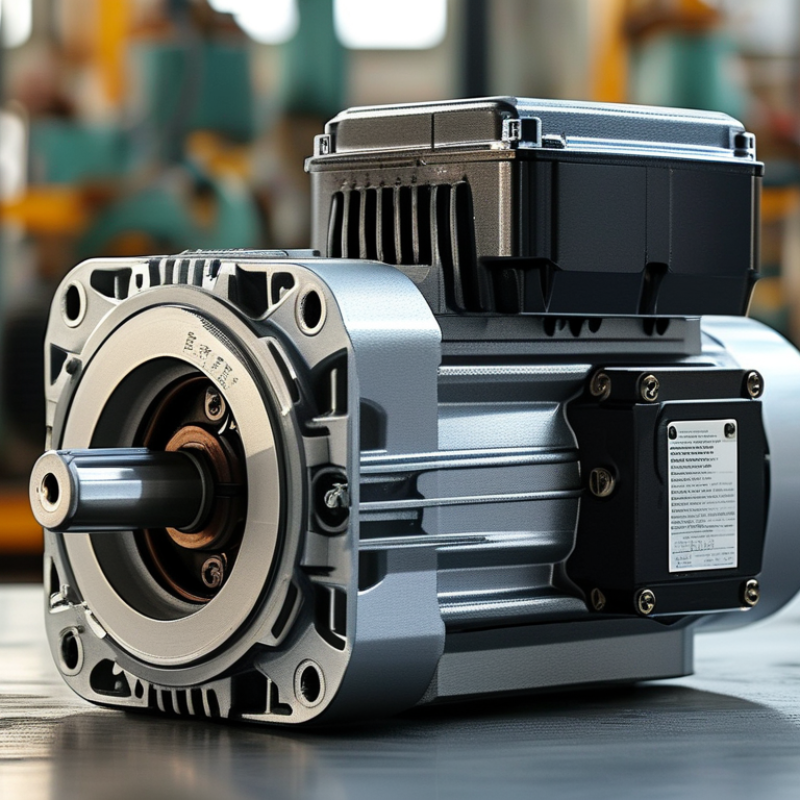
A compact gear motor combines an electric motor and a gearbox in one small housing. The motor produces rotational force, while the gearbox reduces speed and increases usable torque. Inside, meshing gears transfer motion through several stages. The output shaft then drives a conveyor roller, valve, pump, or robotic joint.
The International Energy Agency’s 4E Electric Motor Systems Annex reports that motor systems consume about 53% of global electricity. The U.S. Department of Energy also states that motor-driven equipment uses more than 70% of manufacturing electricity. These figures make efficiency more than a specification. It affects operating cost, heat, and equipment life.
When choosing a compact gear motor in 2026, measure starting torque, running torque, output speed, duty cycle, and available space. A conveyor may need high starting torque, even when its normal load seems light. Check gearbox efficiency, backlash, noise, thermal limits, and enclosure protection. A higher reduction ratio can increase torque, but it may reduce speed and responsiveness.
A neat spreadsheet can still miss real loads. Belts stretch. Bearings wear. Dust enters. Test the motor under the worst expected condition, not only at no-load speed. Select the smallest practical unit, but leave thermal and torque margin for unexpected resistance.
A compact gear motor should be selected from real load data, not housing size. Start with output torque, speed, and duty cycle. Calculate torque from load force and drum radius, then add a practical service factor. A 20% margin may work for smooth loads, but frequent starts demand more. Check it carefully.
The International Energy Agency’s Energy Efficiency 2023 report states that electric motor systems consume about 50% of global electricity. Efficiency therefore matters, even in small machines. Compare motor efficiency, gearbox efficiency, and standby power together. Specify the required reduction ratio, rated voltage, current, thermal limits, and permissible radial and axial loads. For positioning equipment, backlash can be more important than peak torque. A motor that meets torque but misses repeatability is still the wrong choice. IEC 60034-30-1 provides efficiency-class guidance, although compact integrated units may require careful interpretation.
Environmental details often decide service life. Confirm the IP rating, ambient temperature, mounting position, lubrication method, noise target, and brake requirements. The U.S. Department of Energy’s Improving Motor and Drive System Performance report identifies motor-driven systems as roughly 70% of industrial electricity use. That figure makes efficiency testing worth the effort. Yet catalog efficiency may not match performance under shock loads or poor ventilation. I would test the motor at the actual voltage, duty cycle, and temperature. Small prototypes expose oversized assumptions quickly.
How to Choose a Compact Gear Motor in 2026
Matching a compact gear motor starts with the driven load, not the catalog speed. Record starting torque, running torque, duty cycle, and available space. The U.S. Department of Energy reports that motor-driven equipment uses about 70% of industrial electricity. Efficiency deserves attention, even in small machines.
Choose a brushed DC motor for simple, low-cost speed control. Select a brushless DC motor for longer duty and reduced maintenance. Stepper motors suit positioning, but they can lose torque at higher speeds. An induction motor fits continuous operation with stable AC power. It is less convenient for compact battery equipment.
Gear ratio controls the trade-off between speed and torque. A 1,800 rpm motor with a 30:1 reducer produces roughly 60 rpm before losses. Output torque will not equal the theoretical value. Allow for efficiency, starting load, and a practical service factor. The IEA’s Energy Efficiency 2017 analysis identifies motor systems as consuming approximately 53% of global electricity, making avoidable losses significant.
Check the real operating point under load. A motor that reaches the target speed unloaded may stall beside a cold gearbox. I have seen spreadsheet selections fail because friction and acceleration were ignored. That mistake is easy to repeat. Review thermal rise, noise, backlash, shaft load, and enclosure protection against IEC 60034 requirements. Measure the prototype for several hours, then reconsider the ratio.、】【
How to Match Motor Type, Gear Ratio, and Operating Speed
Choosing a compact gear motor starts with the actual load, not the catalog headline. Measure the torque needed at the shaft, then include startup resistance, friction, and acceleration. A conveyor moving smoothly may need far more torque when heavily loaded. I once underestimated this difference during a small automation project. The motor worked, but its housing became uncomfortably hot.
Calculate required torque with a safety margin, usually based on operating conditions and duty cycle. Continuous loads, frequent starts, and sudden reversals require different allowances. Check the gearbox output speed, shaft direction, mounting position, and rated load capacity together. A compact housing does not mean unlimited strength. Radial and axial forces can damage bearings, even when torque appears acceptable.
Efficiency deserves practical testing. Compare input power with useful mechanical output power under real load. Low efficiency creates heat and raises energy use. Watch temperature after extended operation, not only during a short bench test. Noise, vibration, and speed drop also reveal problems. A motor that meets the calculation may still fail in a dusty, poorly ventilated enclosure. Recheck the assumptions. Numbers can look precise while the application remains uncertain. A small prototype test, using the intended gear ratio and load, often exposes weaknesses earlier than a specification sheet.
How to Choose a Compact Gear Motor in 2026?
Material selection should match the real load, not only the catalog torque. Hardened steel gears suit repeated shock and high cycle counts. Sintered gears can reduce cost and noise in lighter applications. Aluminum housings shed heat quickly, while stainless steel resists cleaning chemicals and humid air. IEA’s Energy Efficiency 2023 report estimates that motor systems consume about 53% of global electricity. Small efficiency losses matter. I have seen compact units run hot because engineers overlooked duty cycle and mounting airflow.
Protection ratings need careful interpretation. Under IEC 60529, IP65 indicates dust-tight construction and protection against water jets. IP67 adds temporary immersion protection, but it does not automatically guarantee pressure-wash durability. A sealed connector, shaft seal, and cable gland must match the housing rating. For coastal equipment, specify corrosion-resistant fasteners and inspect coating damage around mounting holes. This is often missed.
Maintenance features can decide service life. Choose sealed bearings for clean, inaccessible assemblies, or regreasable bearings where planned maintenance is practical. ISO 281 provides bearing-life methods, but calculated life can exceed reality when misalignment, vibration, or heat is ignored. The U.S. Department of Energy’s motor-system guidance links efficiency with correct sizing, alignment, and operating conditions. Add temperature monitoring when downtime is expensive. Keep a manual inspection point. Perfect specifications still fail in dusty plants.
| Selection Factor | Recommended Option | Typical Specification or Range | Why It Matters | Best-Fit Applications | Selection and Maintenance Notes |
|---|---|---|---|---|---|
| Gearbox Type | Planetary gearbox | High torque density; commonly available with multiple reduction stages | Shares load across several planet gears and provides a compact package with good torsional stiffness. | Robotics, positioning systems, compact automation, and intermittent high-load motion | Check rated output torque, peak torque, backlash, and allowable radial and axial loads. Use the specified lubricant and inspect seals. |
| Gearbox Type | Worm gearbox | High reduction in a compact right-angle configuration; efficiency varies with ratio and lubrication | Provides a simple right-angle drive and may resist back-driving at selected ratios, but generates more heat than many parallel-axis designs. | Conveyors, gates, lifts, and applications requiring a right-angle output | Verify efficiency, thermal capacity, duty cycle, and whether the mechanism is genuinely self-locking. Do not rely on self-locking as a safety brake. |
| Gear Material | Hardened or case-hardened steel | Suitable for repeated loading, shock loads, and high cycle counts when properly heat-treated | Offers high wear resistance and load capacity compared with many untreated or non-metallic alternatives. | Continuous or frequent operation, high starting torque, and compact drives with high output loads | Confirm hardness, tooth geometry, surface finish, and lubrication compatibility. Excessive noise can indicate misalignment, wear, or insufficient lubrication. |
| Gear Material | Engineering polymer or composite gear | Low noise and low mass; load and temperature capability depend strongly on the polymer formulation | Can reduce acoustic noise, inertia, and lubrication requirements in lightly loaded mechanisms. | Small actuators, office equipment, medical mechanisms, and low-noise indoor products | Check continuous torque, peak torque, operating temperature, chemical compatibility, creep, and dimensional stability before selection. |
| Housing Material | Aluminum alloy housing | Lightweight, corrosion-resistant when suitably finished, and relatively thermally conductive | Helps reduce equipment mass and can transfer heat from the motor and gearbox to the mounting structure. | Portable equipment, general automation, packaging machinery, and space-limited assemblies | Check coating or anodizing for humid environments. Ensure the mounting surface is rigid and provides adequate heat dissipation. |
| Housing Material | Stainless steel housing | High resistance to corrosion; exact resistance depends on alloy, finish, chemicals, and cleaning method | Supports hygienic or washdown-oriented designs where corrosion and surface contamination are concerns. | Food-processing areas, beverage equipment, outdoor installations, and corrosive environments | Confirm the stainless-steel grade, surface finish, fastener material, chemical exposure, and cleaning pressure. Stainless steel does not automatically make the complete motor washdown-proof. |
| Ingress Protection | IP54 | Limited dust ingress that does not interfere with operation; protection against water splashes from any direction | Provides basic protection for ordinary indoor industrial environments without direct water jets. | Clean workshops, cabinets, conveyors, and general factory automation | Keep the motor away from hose spray, immersion, heavy dust, and condensation unless a higher rating is specified and verified. |
| Ingress Protection | IP65 | Dust-tight; protected against water jets from any direction under the applicable test conditions | Offers stronger protection against dust and routine splashing or low-pressure washdown than IP54. | Dusty production lines, outdoor machinery with suitable cable entries, and light washdown areas | Inspect cable glands, connectors, shaft seals, and mounting interfaces. IP65 does not mean protection against immersion or high-temperature pressure washing. |
| Ingress Protection | IP67 | Dust-tight; temporary immersion protection under the stated test depth and duration | Helps protect against temporary flooding, condensation, and accidental immersion. | Outdoor equipment, low-level machinery, wet areas, and applications exposed to temporary water immersion | Confirm the exact test conditions and whether connectors, brakes, encoders, and cables share the same rating. Replace damaged seals promptly. |
| Thermal Management | External fins or metal mounting flange | Improves heat transfer; actual temperature depends on load, speed, ambient temperature, and installation | Lower operating temperature generally supports insulation life, lubricant life, and stable performance. | Continuous-duty compact drives and enclosed installations with limited airflow | Do not cover cooling surfaces. Check allowable winding temperature, ambient temperature, duty cycle, and mounting orientation. |
| Lubrication | Factory-filled lifetime lubricant | Maintenance-free only within the specified load, speed, temperature, and service-life conditions | Reduces routine servicing and prevents incorrect lubricant selection or contamination during relubrication. | Sealed compact equipment, inaccessible installations, and moderate-duty applications | “Lifetime” is application-dependent. Monitor noise, temperature, vibration, leakage, and output play rather than adding incompatible grease. |
| Maintenance Access | Replaceable seals, accessible fasteners, and service connectors | Allows inspection or replacement without removing the complete machine assembly | Shortens downtime and makes preventive maintenance easier to perform consistently. | Production machinery, conveyors, and equipment where downtime is costly | Review spare-part availability, service instructions, seal replacement procedures, and required tools before purchase. |
| Duty and Load | Select from calculated continuous and peak torque | Allow for acceleration torque, friction, shock loads, duty cycle, and a suitable engineering margin | A motor that meets only the nominal running torque may stall, overheat, or experience premature gear wear during starting or jam conditions. | All applications, especially those with frequent starts, reversals, or variable loads | Calculate output speed and torque from the actual load profile. Check gearbox service factor, peak torque, radial load, axial load, and back-driving behavior. |
| Monitoring Features | Thermal protection and optional position or speed feedback | Thermal switches, temperature sensors, Hall sensors, encoders, or current monitoring, depending on the control system | Can help detect overheating, overload, stalled motion, loss of position, or abnormal operating conditions. | Automated machinery, safety-related monitoring, precision motion, and remote equipment | Confirm sensor voltage, signal type, connector rating, controller compatibility, and whether protective devices require external circuitry. |
It combines an electric motor and gearbox inside one small housing. The motor creates rotation. Gears reduce speed and increase usable torque. The output shaft can drive a conveyor roller, pump, valve, or robotic joint.
Measure starting torque, running torque, output speed, and duty cycle. A conveyor may need strong starting torque, even with a light-looking load. Higher reduction ratios usually increase torque but reduce speed and responsiveness. Leave extra capacity for unexpected resistance.
Motor systems consume a major share of industrial electricity. Small efficiency losses can increase operating cost and heat. Heat may shorten equipment life. Check gearbox efficiency and operating temperature, not only the catalog rating.
Hardened steel gears suit repeated shocks and high cycle counts. Sintered gears may suit lighter loads and quieter operation. Aluminum housings release heat quickly. Stainless steel handles humid air and many cleaning chemicals better.
IP65 means dust-tight protection and resistance to water jets. IP67 adds temporary immersion protection. It does not automatically ensure pressure-wash durability. Match the connector, shaft seal, and cable gland to the housing rating.
Use corrosion-resistant fasteners and inspect coating damage around mounting holes. Salt air can attack exposed metal quickly. Check seals regularly. A high enclosure rating alone may not prevent corrosion.
Sealed bearings suit clean assemblies that are difficult to access. Regreasable bearings suit planned maintenance programs. Temperature monitoring helps when downtime is expensive. Keep a manual inspection point. Perfect specifications still fail in dusty plants.
Test it under the worst expected load, not only at no-load speed. Include stretched belts, worn bearings, dust, and restricted airflow. Check noise, backlash, heat, and starting performance. A tidy spreadsheet can still miss real loads.
Choosing the right Compact Gear Motor begins with understanding how the motor and gearbox work together to convert electrical energy into controlled mechanical motion. The selection process should consider key technical specifications such as rated voltage, power, operating speed, gear ratio, torque, duty cycle, and available installation space. Matching the motor type and gear ratio to the required output speed helps ensure stable and precise performance in the intended application.
It is also important to evaluate starting torque, continuous load capacity, peak loads, energy efficiency, noise, and heat generation. Material selection should suit the working environment, while suitable protection ratings can help shield the motor from dust, moisture, and other external conditions. Finally, maintenance features such as accessible components, lubrication requirements, service life, and ease of replacement should be reviewed. A balanced assessment of performance, durability, efficiency, and maintenance needs will support a reliable and cost-effective choice.
