Dynetic Motor Dynetic Motor

7 Tips for Choosing a High Efficiency Gear Motor

Time:2026-09-24 Author:Amelia
0%

Selecting a High Efficiency Gear Motor is more than comparing efficiency percentages on a catalog page. Real performance depends on load, speed, duty cycle, heat, lubrication, and installation conditions. A motor rated at 95% efficiency may perform poorly if it drives an oversized gearbox or operates far below its intended load.

Austin Hughes, a respected electric-motor researcher, wrote in Electric Motors and Drives, “The electric motor is the workhorse of industry.” That workhorse must match the machine. A conveyor carrying uneven boxes needs different protection and torque behavior than a compact packaging unit. Check the required output torque, reduction ratio, starting load, operating hours, ambient temperature, and mounting position. Small details matter.

Measure twice.

These seven practical tips examine the choices that engineers and maintenance teams often overlook. They consider motor efficiency, gearbox losses, thermal capacity, service factors, sealing, control compatibility, and long-term maintenance. An IP65 enclosure may suit a dusty production area, but washdown chemicals can demand more careful material selection. Similarly, a variable-frequency drive can improve control, yet poor settings may increase heat and shorten insulation life.

No selection guide is perfect. Application data can be incomplete, and real factories rarely behave like laboratory conditions. That is why reliable decisions should combine manufacturer curves, verified standards, field experience, and measured operating results. A High Efficiency Gear Motor should save energy without sacrificing starting reliability, mechanical life, or serviceability. The best choice is not always the smallest or most efficient model on paper. It is the model that remains dependable beside the machine, shift after shift.
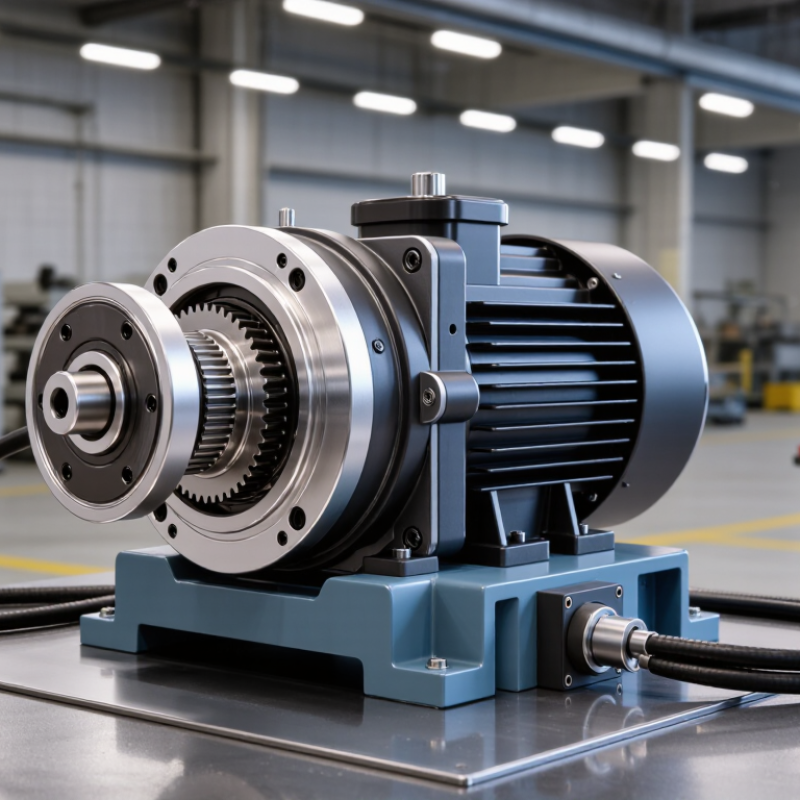
7 Tips for Choosing a High Efficiency Gear Motor

What a High-Efficiency Gear Motor Is and How It Works

What a High-Efficiency Gear Motor Is and How It Works

A high-efficiency gear motor combines an electric motor with a gearbox. The motor creates rotation, while the gears reduce speed and increase usable torque. This conversion helps equipment move loads with less wasted energy. In practical use, lower heat, quieter operation, and reduced electricity consumption are common signs of good efficiency. Still, efficiency ratings can mislead when measured under different loads.

Tip: Check the motor’s rated efficiency at your actual operating point. A unit performing well at full load may waste energy during light-duty cycles. Tip: Match the gearbox ratio to the required speed and torque. An oversized motor can consume unnecessary power. Tip: Inspect the duty cycle, starting frequency, and ambient temperature before selecting a model.

When choosing a high-efficiency gear motor, examine output torque, service factor, mounting space, and shaft alignment. Tip: Ask for test data, not only promotional claims. Reliable documentation should show testing conditions and tolerances. Tip: Consider lubrication and maintenance access, especially in dusty workshops. Tip: Compare total operating cost, not just purchase price. A slightly higher initial cost may repay itself through lower energy use. Tip: Leave enough torque margin for unexpected load changes. Too little margin causes overheating and early wear. I have seen calculations fail because friction was underestimated. That mistake is easy to repeat. Tip: Review the installation with a qualified engineer before operation, because real machines rarely behave exactly like spreadsheets.

How to Match Motor Power and Speed to the Application

Choosing a high efficiency gear motor starts with the machine's real workload, not its catalog rating. Measure required torque at the gearbox output, then record operating speed, duty cycle, and starting load. A conveyor carrying wet boxes may need extra torque during acceleration. A small indexing table may need steady, precise movement instead. Do not size only from average load. Peak torque matters. So does inertia. I have seen motors run acceptably in tests, then overheat after repeated starts. That failure usually began with an optimistic load estimate.

Match motor power after estimating torque and speed together. Use the relationship P = T × n, with suitable unit conversion, as a check rather than the entire decision. Gear reduction can increase output torque, but it also introduces losses. Select a reduction ratio that keeps the motor near its efficient operating range. Excessive reduction may create slow response and unnecessary heat. Insufficient reduction can force the motor to draw high current. Check the efficiency curve at the actual load, not only at the published maximum. Review service factor, thermal limits, and starting frequency. Small details matter.

For variable-speed equipment, verify the usable speed range under load. A motor reaching rated speed unloaded may stall when the product enters the machine. Test acceleration, braking, and reversal with the heaviest realistic payload. Record casing temperature and current after a full duty cycle. Leave practical margin, but avoid massive oversizing; it can reduce efficiency and control quality. I still revisit calculations after installation. Real friction is rarely identical to the drawing. That is the part many selection sheets miss.

7 Tips for Choosing a High Efficiency Gear Motor - How to Match Motor Power and Speed to the Application
Tip Selection Dimension Key Data or Formula Application Matching Example Efficiency and Reliability Check
1 Define the required output speed Determine the driven machine speed before selecting the motor.
Gear ratio ≈ Motor speed ÷ Required output speed
A motor running at 1,450 rpm for a conveyor requiring 50 rpm needs an approximate reduction ratio of:
1,450 ÷ 50 = 29:1
Use the actual operating speed range, not only the nominal speed. Variable-frequency drives may allow speed adjustment, but the motor and gearbox must remain within their rated limits.
2 Calculate output torque For power in kilowatts and speed in revolutions per minute:
Torque (N·m) = 9,550 × Power (kW) ÷ Speed (rpm)
A 0.75 kW motor with a 50 rpm output speed and 85% total transmission efficiency produces approximately:
9,550 × 0.75 × 0.85 ÷ 50 = 122 N·m
Compare calculated torque with the gearbox’s continuous torque rating. Also check peak torque during acceleration, reversing, jams, or shock loading.
3 Match motor power to the real load Required motor power can be estimated from output torque and speed:
Power (kW) = Torque (N·m) × Speed (rpm) ÷ 9,550 ÷ Efficiency
If the load requires 100 N·m at 60 rpm and total efficiency is 85%:
100 × 60 ÷ 9,550 ÷ 0.85 ≈ 0.74 kW
A motor around 0.75 kW is a reasonable starting point, subject to starting and overload requirements.
Avoid significant oversizing because it can increase purchase cost, standby losses, and operating inefficiency. Avoid undersizing because it may cause overheating and premature failure.
4 Allow for service factor and duty cycle Select for the application’s operating pattern:
Design load = Normal load × Service factor
For a smooth, lightly loaded conveyor, a service factor near 1.25 may be suitable. For frequent starts, variable loads, or moderate shock, a higher factor may be required after reviewing the manufacturer’s rating method. Confirm continuous, intermittent, or cyclic duty. A motor rated for continuous operation may not be suitable for frequent high-torque starts without thermal and starting-current checks.
5 Compare total efficiency Overall efficiency includes motor, gearbox, seals, bearings, and any additional transmission components:
Overall efficiency = Motor efficiency × Gearbox efficiency × Other efficiencies
If motor efficiency is 88% and gearbox efficiency is 85%:
0.88 × 0.85 = 74.8% overall efficiency
For applications operating many hours per day, prioritize high motor efficiency, low gearbox losses, correct lubrication, and operation close to the intended load range.
6 Check starting torque and load behavior Starting torque must exceed the torque needed to overcome static friction, inertia, gravity, and process resistance.
Starting torque requirement < Available motor and gearbox torque
Inclined conveyors, mixers, hoists, and heavily loaded rollers typically require more starting torque than their steady running torque. A soft starter or drive may reduce mechanical shock but does not eliminate the need for sufficient torque. Review acceleration time, reflected inertia, braking, backdriving, and the possibility of sudden load increases. Hoisting applications also require suitable holding and braking provisions.
7 Verify environmental and mechanical requirements Check enclosure protection, ambient temperature, mounting position, shaft loading, noise, lubrication, and available installation space.
Protection level and thermal rating must suit the installation environment
A washdown area may require corrosion-resistant construction and an appropriate ingress-protection level. Dusty areas may require sealed construction, while high ambient temperatures can reduce allowable motor load. Confirm the rated voltage, frequency, insulation class, duty rating, mounting arrangement, shaft dimensions, radial and axial load capacity, maintenance intervals, and compatibility with the control system.

How to Compare Efficiency Ratings and Gearbox Types

When choosing a high-efficiency gear motor, compare complete system efficiency, not motor efficiency alone. A motor may reach 90% efficiency under ideal laboratory conditions. The gearbox can reduce that figure significantly. Ask for input power, output torque, speed, ratio, and test conditions. Measure under load.

Gearbox design strongly affects energy use. Helical gearboxes usually provide smooth operation and good efficiency. Bevel-helical units suit right-angle installations while retaining efficient power transfer. Planetary gearboxes offer high torque in a compact housing, but their cost and maintenance needs require careful review. Worm gearboxes are often affordable and quiet. However, sliding contact can create more heat and lower efficiency, especially at high ratios. Self-locking should never be assumed without verified data.

Compare each option at the same output speed, torque, duty cycle, and ambient temperature. A rating from an unloaded test may not represent a conveyor moving heavy cartons. Check service factors, lubrication requirements, backlash, and expected operating hours. I have seen teams select the highest percentage and overlook heat buildup. That mistake can shorten bearing life. Small errors matter. Also, efficiency may change across the speed range, so a motor controlled by a variable drive needs extra evaluation. A reliable comparison uses measured performance, manufacturer test methods, and realistic operating data. Our first estimate is sometimes wrong. Recheck it.

How to Check Operating Conditions and Compatibility

Choosing a high-efficiency gear motor starts with the operating conditions, not the catalog efficiency value. Record continuous torque, peak torque, speed range, duty cycle, starts per hour, and ambient temperature. Include shock loads from sudden stops or uneven materials. A practical lesson is simple: the first sizing pass is rarely right.

Tip: Check the load profile.

The U.S. Department of Energy’s Motor Systems Market Assessment reports that motor-driven equipment can consume more than half of industrial electricity. Small efficiency losses therefore become significant during long shifts. However, an oversized motor may run below its efficient range and create unnecessary costs. Measure real torque when possible. Do not rely only on estimated machine data.

Tip: Verify compatibility before purchase.

Compare the motor’s rated speed, output torque, gearbox ratio, mounting position, shaft size, and allowable radial load. Check voltage, frequency, control method, enclosure rating, and insulation requirements. IEC 60034-30-1 defines international motor efficiency classes, but classification alone does not confirm system performance. The gearbox, coupling, and controller must work together.

Tip: Test the difficult moment.

Observe cold starts, reversals, jams, and high-temperature operation. A motor that performs well at steady load may overheat during repeated acceleration. Leave reasonable thermal and service margins, but avoid excessive oversizing. That compromise often needs review. Field measurements may expose assumptions that looked convincing on paper.

How to Assess Maintenance Needs and Total Ownership Costs

Choosing a high-efficiency gear motor requires more than comparing purchase prices. In field audits, I inspect lubrication points, seals, bearings, and gearbox temperature first. The U.S. Department of Energy’s Improving Motor and Drive System Performance Sourcebook reports that motor systems can consume more than 70% of industrial electricity. Efficiency matters, but accessibility matters too. A motor that is difficult to service may create expensive downtime.

Assess maintenance needs across seven practical areas: lubrication intervals, bearing replacement, shaft alignment, seal inspection, thermal monitoring, spare-part availability, and technician access. The DOE Operations & Maintenance Best Practices Guide supports predictive maintenance because measured vibration and temperature can reveal faults earlier than fixed schedules. Still, sensors are not magic. Poor placement, missed readings, and untrained staff reduce their value. I have seen simple inspection logs outperform complicated systems.

Calculate total ownership costs over the expected service life. Include electricity, oil, labor, replacement parts, downtime, installation, and disposal. The DOE motor-system guidance indicates that energy can represent more than 90% of a motor’s lifetime cost in continuous-duty applications. That figure changes with load and operating hours, so verify it with site data. Compare efficiency at the actual duty point, not only the nameplate rating. A slightly cheaper unit may demand more power every hour. The spreadsheet looked convincing. The maintenance reality did not.

7 Tips for Choosing a High Efficiency Gear Motor

Five-year total ownership cost comparison based on a 5.5 kW gear motor operating 4,000 hours per year, electricity priced at $0.12/kWh, and typical purchase and maintenance estimates.

Higher-efficiency motors generally reduce energy costs over time. When selecting a gear motor, compare efficiency, purchase price, service intervals, lubrication requirements, expected operating hours, and the availability of replacement components.

FAQS

What should I measure before selecting a gear motor?

Measure output torque, operating speed, duty cycle, starting load, and ambient temperature. Include peak torque, not only average torque. Real machines surprise people.

Why does peak torque matter?

Peak torque appears during acceleration, sudden stops, jams, or uneven loads. A conveyor carrying wet boxes may need extra force during startup. Average load can hide this demand.

How do power, torque, and speed relate?

Use P = T × n with suitable unit conversion. Treat this equation as a check, not the complete selection method. Gear losses and operating conditions still matter.

How should I choose the reduction ratio?

Select a ratio that keeps the motor near its efficient operating range. Excessive reduction may slow response and create heat. Insufficient reduction can increase current draw.

What compatibility details require checking?

Compare output torque, speed, ratio, mounting position, shaft size, and allowable radial load. Also check voltage, frequency, control method, enclosure, and insulation requirements. Small mismatches become costly.

How can I test performance under realistic conditions?

Test cold starts, reversals, braking, and the heaviest practical payload. Record current and casing temperature after a complete duty cycle. Steady testing is not enough.

Is a larger motor always safer?

No. Oversizing may reduce efficiency and control quality. Undersizing can cause overheating or stalling. Leave reasonable margin, then question your assumptions.

What maintenance needs should I review?

Check lubrication, seals, bearings, shaft alignment, temperature, vibration, spare parts, and technician access. Simple inspection logs can outperform complicated systems. Sensors need proper placement.

How should I calculate total ownership cost?

Include electricity, labor, oil, parts, installation, downtime, and disposal. Compare efficiency at the actual duty point. A cheaper motor may consume more power every hour.

Conclusion

Choosing a High Efficiency Gear Motor begins with understanding how the motor and gearbox work together to convert electrical energy into controlled mechanical motion. The right selection should match the required torque, power, speed, duty cycle, and load characteristics of the application. Comparing efficiency ratings and gearbox designs can help reduce energy consumption while delivering reliable performance. It is also important to evaluate operating temperature, dust, moisture, vibration, mounting position, and electrical compatibility before installation.

A practical choice should also consider long-term maintenance and total ownership costs. Look for a design that supports easy inspection, suitable lubrication, dependable components, and minimal downtime. Although a highly efficient model may have a higher initial price, its lower energy use, reduced maintenance demands, and longer service life can provide greater value over time. By reviewing performance requirements, operating conditions, efficiency, compatibility, and lifecycle expenses together, users can select a gear motor that offers stable operation and efficient power transmission.

Amelia

Amelia

Amelia is a seasoned marketing professional with a wealth of expertise in our company’s core offerings. With an unwavering passion for driving growth and innovation, she plays a pivotal role in shaping our marketing strategies and enhancing brand visibility. A key aspect of her responsibilities......