 Dynetic Motor
Choosing the best Electric Drive Motors in 2026 is not a simple horsepower contest. A motor that suits a compact city car may struggle in a heavy delivery van. The right choice depends on the vehicle, duty cycle, battery, inverter, and cooling system. That matters.
Energy-efficiency expert Amory Lovins is often quoted as saying, “The cheapest energy is the energy you don’t use.” For electric drives, that principle makes real-world efficiency more useful than a peak-rating headline. A motor’s performance can shift with speed, temperature, load, and control strategy. Small differences show up in range, heat, and operating cost.
This guide compares major motor types and the trade-offs behind them. It considers permanent-magnet synchronous motors, induction motors, and switched-reluctance designs. It also looks at power density, efficiency across operating speeds, thermal management, materials, maintenance, and cost. These details matter on a test bench and on a steep road with a warm battery.
There is no universal winner. A high-efficiency design may rely on costly materials, while a simpler motor may better fit a fleet that values durability and service access. Published specifications also do not always reveal performance under sustained load. That is worth questioning. The sections ahead explain what buyers and engineers should compare, where 2026 technology is advancing, and why the best Electric Drive Motors are the ones matched carefully to their application.
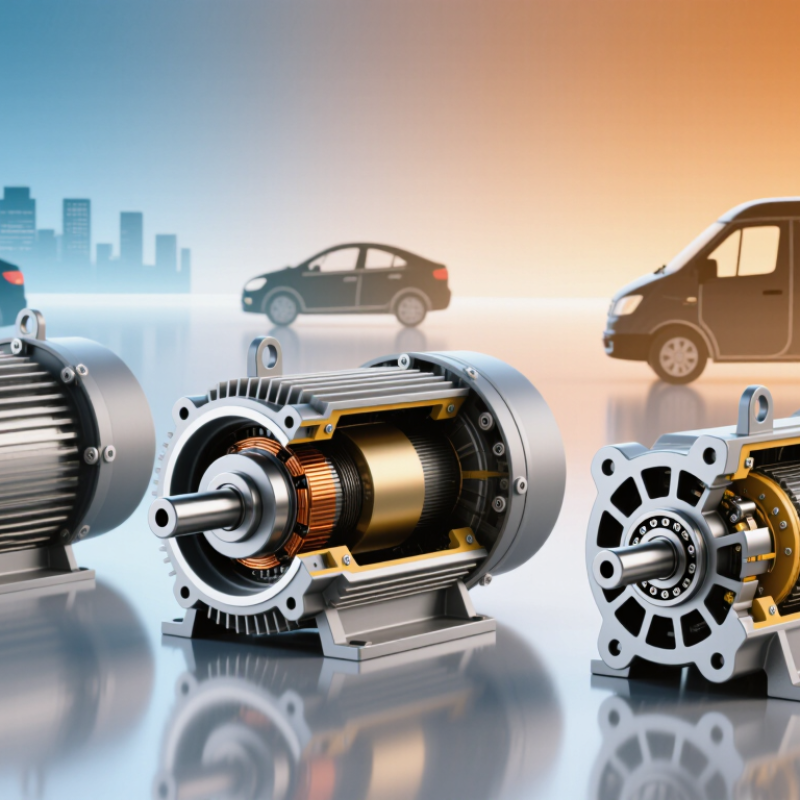
What Are the Best Electric Drive Motors in 2026?
How Electric Drive Motors Convert Power into Motion
An electric drive motor turns electrical energy into rotation through a carefully controlled magnetic field. In many vehicles, a battery supplies direct current, while an inverter converts it into timed, three-phase current. That current flows through coils in the stator, creating a magnetic field that rotates around the motor. The rotor responds to this moving field and turns the central shaft. That is the conversion. A reduction gear then increases usable wheel torque while lowering rotational speed.
The process feels simple, but control matters. Sensors and software adjust current as the driver presses the accelerator, helping the motor deliver smooth torque from low speeds. Under hard acceleration, heat builds in the windings and power electronics, so cooling design affects sustained performance. Efficiency, torque delivery, thermal management, and serviceability are useful measures when comparing drive motors in 2026; peak power alone tells an incomplete story. A motor that performs well on a short test may behave differently on a long climb. This explanation also leaves out losses from resistance, friction, and switching. Real systems are less tidy than diagrams suggest. That distinction matters.
| Motor Type | How It Converts Power into Motion | Typical Strengths | Main Trade-Offs | Best-Fit Applications | Overall Fit |
|---|---|---|---|---|---|
| Interior Permanent-Magnet Synchronous Motor (IPMSM) | Three-phase stator currents create a rotating magnetic field. Embedded rotor magnets interact with that field, while rotor geometry also produces reluctance torque. | High efficiency across a broad operating range; strong torque and power density; effective field-weakening for high-speed operation. | Uses permanent magnets, which can add material cost and supply-chain exposure. Requires a controlled inverter and careful thermal management. | Electric vehicles and other traction systems that need a compact motor, high efficiency, and a wide speed range. | Best all-round traction choice when efficiency, size, and performance are priorities. |
| Surface Permanent-Magnet Synchronous Motor (SPMSM) | Permanent magnets mounted on the rotor interact with the rotating magnetic field produced by the stator windings. | High torque per unit size; smooth operation; relatively straightforward rotor construction. | High-speed operation can require a mechanically strong rotor sleeve. Magnet use brings cost and sourcing considerations. | Compact drives, pumps, compressors, and applications with moderate speed variation. | Strong choice for compact, efficient drives where its operating speed range is suitable. |
| Induction Motor | The stator’s rotating magnetic field induces currents in the rotor. Interaction between those currents and the magnetic field produces torque. | No permanent magnets or rotor electrical connections; robust construction; well-established control methods. | Rotor current creates heat and can reduce efficiency, particularly at some light-load operating points. Advanced control may be needed for precise performance. | Industrial machinery, pumps, fans, and traction systems where durability and magnet-free construction matter. | Best for rugged, magnet-free operation and broad industrial use. |
| Switched-Reluctance Motor (SRM) | Sequentially energized stator poles pull the toothed rotor toward positions of lower magnetic reluctance, producing rotation. | Simple, magnet-free rotor; tolerates high temperatures; can offer fault-tolerant operation with suitable drive design. | Torque ripple and acoustic noise can be challenging. It needs specialized electronic control and careful system-level design. | Harsh environments, high-temperature equipment, and applications where avoiding permanent magnets is important. | Best for durability and magnet-free designs when noise and torque smoothness can be managed. |
| Wound-Field Synchronous Motor | Stator currents create a rotating magnetic field, while electrically excited rotor windings create the rotor magnetic field. | Rotor field can be adjusted; avoids permanent magnets; can support efficient operation over a broad range when properly controlled. | Rotor excitation adds electrical and mechanical complexity. Slip rings or a brushless excitation system may be required, depending on the design. | Large industrial drives and traction systems that need controllable magnetic flux or magnet-free construction. | Best when adjustable rotor flux is valuable and added excitation hardware is acceptable. |
| Axial-Flux Permanent-Magnet Motor | Magnetic flux travels mainly along the motor’s axis, with rotor and stator discs interacting to generate torque. | Flat, compact form factor; can provide high torque in a short axial length. | Thermal management, manufacturing tolerances, and mechanical design can be demanding. Performance and cost depend strongly on the specific design. | Space-constrained vehicles, specialized machinery, and applications where a short, disc-shaped motor is advantageous. | Best for packaging constraints rather than a universal replacement for radial-flux motors. |
How to choose: There is no single best motor for every drive. The right choice depends on the duty cycle, speed and torque requirements, cooling, inverter, cost, noise limits, and material preferences. Efficiency varies with motor design and operating point; compare complete drive systems using the same test conditions.
Efficiency shifts with speed, load, temperature, and control settings. A motor may perform well in a short test, then lose efficiency on a long climb. Small details matter.
Permanent-magnet synchronous motors provide strong low-speed torque and compact packaging. That helps in stop-and-go traffic. Magnet sourcing remains a trade-off.
They rely on magnets and need careful thermal management. Heat matters. Their efficiency can be strong, but it is not guaranteed at every operating point.
Induction motors avoid permanent magnets and can operate reliably across varied conditions. At some light loads, they may use more energy than a well-matched permanent-magnet motor.
Repeated acceleration and thermal durability matter more than peak power alone. Liquid cooling can help a loaded van climb steep streets or make frequent stops. Test it under real workloads.
Liquid-cooled induction or permanent-magnet drives may work, depending on payload, route, and energy targets. Sustained torque matters. No universal winner.
They use a simple rotor and tolerate high temperatures well. Torque ripple and noise can make refinement harder, especially in a quiet cabin. That trade-off is easy to underestimate.
Compare efficiency maps across actual driving speeds, not just one ideal point. Include inverter losses, cooling needs, and sustained torque. Winter range and loaded hill starts deserve testing too; lab results can miss them.
Electric Drive Motors turn electrical energy into rotational force, moving a vehicle through a coordinated system of windings, magnetic fields, and power electronics. Modern vehicles use several motor types, each with distinct trade-offs in efficiency, torque, speed range, cost, and control requirements. The best choice in 2026 depends not on a single specification, but on how well a motor balances performance, energy use, durability, size, and thermal management.
Comparing leading designs reveals that efficiency and driving feel can vary across operating conditions, so selection should reflect the vehicle’s purpose. A compact city car may prioritize low energy consumption and affordability, while a performance vehicle may need strong acceleration and sustained power. Commercial vehicles can place greater emphasis on reliability, load handling, and service life. Understanding these differences helps match a motor to its application and highlights why the most suitable drive system is the one that delivers the right combination of range, responsiveness, and dependable operation.
