Choosing the best Turbo Gear Motor in 2026 is not about chasing the highest torque figure. It is about matching the motor to the load, duty cycle, speed range, and working environment. A compact unit turning a conveyor may need steady torque and long service intervals. A machine cycling under sudden loads may need a different gear ratio, motor type, and thermal margin. Small details matter. A warm housing after one hour can reveal what a product sheet leaves out.
Mechanical engineer Alex Morgan offers this practical reminder: “Choose the gear motor for the load it must handle every day, not the peak number that looks best on paper.” This guide compares key specifications, including rated output torque, gear ratio, efficiency, mounting options, noise, and protection against dust or moisture. It also considers supplier documentation and the availability of replacement parts. Those details can shape ownership costs as much as the purchase price.
There is no universal winner. Not quite. A unit that suits a packaging line may be oversized, noisy, or inefficient in a small positioning system. Buyers should check real operating conditions and confirm ratings with current manufacturer data. We will explain what to compare, which trade-offs deserve attention, and how to narrow the shortlist for your application. Some answers depend on installation details. That is worth admitting.
What a Turbo Gear Motor Is and How It Works
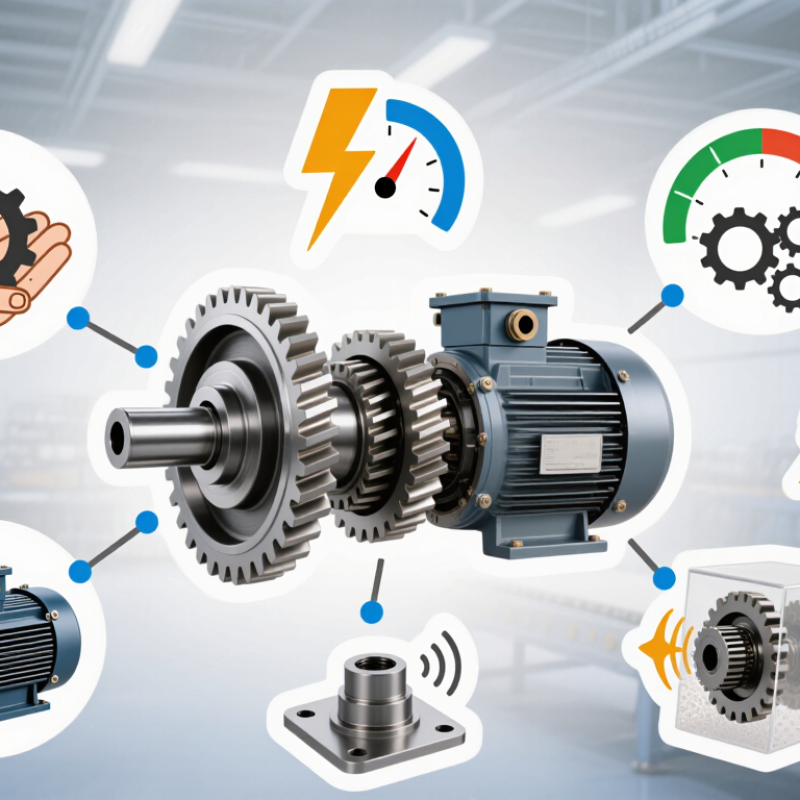
A turbo gear motor pairs an electric motor with a gearbox. The motor supplies rotation, while the gears reduce speed and increase usable output torque. The word “turbo” is not always a standardized engineering category, so check the unit’s rated specifications rather than relying on its name. Inside, meshing gears transfer motion through a compact housing, supported by shafts, bearings, and lubricant. Simple idea. Careful engineering.
When power reaches the motor, its shaft spins quickly. The gearbox passes that rotation through gear stages, slowing the output shaft. For example, a small motor turning at high speed can drive a conveyor more slowly, with greater torque at the shaft. The exact result depends on the gear ratio and operating conditions. Real systems also lose some energy as heat, sound, and friction. A motor that feels cool during a brief test may warm up during a long production shift. That detail is easy to overlook.
Tips: Match rated output torque and speed to the actual load, including startup demands. Check duty cycle, mounting position, and available space. Listen for unusual noise and watch for excess heat during operation. A little uncertainty remains until the motor is tested under its real workload.
Key Components and Design Features
What Is the Best Turbo Gear Motor in 2026?
Key Components and Design Features
A useful turbo gear motor pairs a motor with a reduction gearbox to deliver controlled speed and higher output torque. Its motor type, gear ratio, bearings, and housing all affect performance. The gearbox may use helical or spur gears; each design brings different trade-offs in noise, efficiency, and size. A rigid housing helps keep gears aligned, while suitable seals limit dust and moisture. Small details matter.
Tips: Match the gear ratio to the load and required output speed, not just the motor’s rated power. Check the duty cycle, shaft dimensions, mounting points, and operating temperature. Listen for unusual vibration during testing. It can reveal a poor fit.
The best choice depends on the machine, not a single specification. A higher reduction ratio can increase torque, but may reduce output speed and add bulk. Confirm that the motor can handle startup loads and repeated stops. One easy mistake is overlooking heat: a compact unit may run hot under continuous demand. Specifications help, but real operating conditions still deserve a careful check.
What Is the Best Turbo Gear Motor in 2026? Key Components and Design Features
Gearbox efficiency is one useful comparison when choosing a gear motor. The chart shows approximate typical efficiency ranges per gear stage; actual results vary with design, load, speed, lubrication, and operating conditions.
Efficiency is only one selection factor. Match the motor and gearbox to the required torque, speed, duty cycle, mounting arrangement, and allowable backlash. For a multi-stage gearbox, overall efficiency is lower than the efficiency of any single stage.
How to Evaluate Turbo Gear Motor Performance in 2026
What Is the Best Turbo Gear Motor in 2026?
How to Evaluate Turbo Gear Motor Performance in 2026
A strong turbo gear motor is not simply the unit with the highest rated torque. Match its output speed and continuous torque to the real load, including startup peaks and frequent reversals. The U.S. Department of Energy’s motor-systems sourcebook reports that motor-driven systems account for about 68% of manufacturing electricity use. That makes efficiency worth checking, but compare it at your actual operating point, not only at peak rating. Small detail. A motor running hot beside a dusty conveyor may perform differently from one tested in a clean laboratory.
Ask suppliers for efficiency curves, allowable radial and axial loads, service factor, duty rating, and thermal limits. Check gear backlash and noise under load, then record vibration and case temperature during a representative production run. For context, the DOE sourcebook is an industry reference, not a guarantee that a specific model will meet your application’s needs. Confirm test conditions and measurement methods; performance figures are easy to misread.
Tips: Log motor speed, current, and gearbox temperature during a full shift. Compare readings with the datasheet and repeat the test under the heaviest normal load. Leave room for doubt: one short trial cannot establish long-term reliability. Verify maintenance access, lubricant requirements, and replacement-part availability before choosing.
Matching Motor Specifications to Application Requirements
A “best” turbo gear motor is the one that delivers the required torque and speed without running near its limits. Start with the load: note its weight, startup resistance, operating speed, and hours per day. Then check the motor’s rated output torque, gearbox ratio, duty cycle, and thermal capacity. A conveyor carrying uneven boxes needs different starting torque from a lightly loaded fan. Check the mounting position and available space, too. Small details matter.
Efficiency deserves attention, but it cannot replace correct sizing. The International Energy Agency’s 2016 report, Energy-Efficiency Policy Opportunities for Electric Motor-Driven Systems, estimates that motor-driven systems use about 53% of global electricity. The U.S. Department of Energy’s 2014 motor systems sourcebook reports that they account for about 68% of U.S. industrial electricity use. These figures explain why operating efficiency matters; actual savings depend on the installation and load profile. Ask for efficiency data at the speed and load you expect, not only at a headline rating. I still see selection mistakes made by choosing on peak torque alone. That is easy to miss. Allow for heat, starts per hour, and occasional overloads, then verify the gearbox’s service limits with measured operating conditions.
Choosing the Best Turbo Gear Motor for Your Use Case
What Is the Best Turbo Gear Motor in 2026?
Choosing the best turbo gear motor starts with the actual job, not the largest number on a specification sheet. The term “turbo gear motor” is used inconsistently, so check the manufacturer’s torque, speed, gear ratio, and duty-cycle data. A conveyor moving steady loads needs different performance from a mixer that starts under heavy load. Record the required output speed and peak torque, then check how often those peaks occur. Small details matter. A tight mounting space or poor airflow can change the choice.
Efficiency also deserves attention. The U.S. Department of Energy’s 2014 sourcebook, Improving Motor and Drive System Performance, estimates that motor-driven systems use about 68% of electricity in U.S. manufacturing. That figure is a broad industrial estimate, not a prediction for one machine, but it shows why operating hours and load deserve close review.
Compare efficiency at the expected working load, not only at rated output. Check whether the gearbox can handle continuous operation, starts per hour, and the surrounding temperature. A motor chosen only for peak torque may run hot during long shifts. Real installations are messier than catalogs suggest. Before purchase, verify the shaft orientation, mounting pattern, control compatibility, and service access against the machine itself.
Conclusion
A Turbo Gear Motor combines an electric motor with a geared transmission to deliver controlled speed and increased torque. Its performance depends on how key components—including the motor, gears, bearings, housing, and lubrication system—work together. Design features such as gear arrangement, materials, cooling, and mounting options can affect efficiency, durability, noise, and suitability for different operating conditions.
To choose a Turbo Gear Motor in 2026, compare measurable factors such as output speed, torque, power, efficiency, duty cycle, and expected service life. Then match those specifications to the application’s load, operating environment, available space, and control requirements. The best choice is not necessarily the most powerful or compact unit, but one that reliably meets the application’s needs while balancing performance, energy use, maintenance, and total operating cost.
 Dynetic Motor
