 Dynetic Motor
Dynetic Motor
Dynetic Motor
Choosing the right Industrial Gear Motor begins with the machine, not the catalogue. A motor that looks powerful may still fail under shock loads, frequent starts, or poor ventilation. The real question is simple: what must the drive survive every day?
Dr. Heinz P. Bloch, a respected machinery reliability authority, has emphasized, “Reliability begins with correct equipment selection, not emergency repair.” His principle fits gear motor selection closely. Engineers should examine required torque, output speed, duty cycle, mounting position, ambient temperature, and expected service life. A conveyor moving wet aggregate needs different protection from a clean packaging line. A compact gearbox may fit the frame, yet overheat when operated continuously at high load.
Look beyond rated horsepower. Check the service factor, gearbox ratio, thermal capacity, brake requirements, and shaft arrangement. Confirm that the motor can start the load without excessive current or damaging vibration. In practical inspections, small details often reveal major risks: hardened grease near a seal, misaligned couplings, or an undersized cable entering the terminal box. These are not catalogue numbers.
Experience also teaches humility. No selection method is perfect. Load estimates can be optimistic, and operating conditions may change after installation. I have seen equipment fail because the buyer trusted peak torque instead of measured running torque. That mistake is avoidable. A reliable choice combines manufacturer data, field measurements, maintenance knowledge, and honest discussion with qualified suppliers. The best Industrial Gear Motor is not always the largest or cheapest. It is the one that delivers controlled power, manageable maintenance, and dependable performance in the actual working environment.
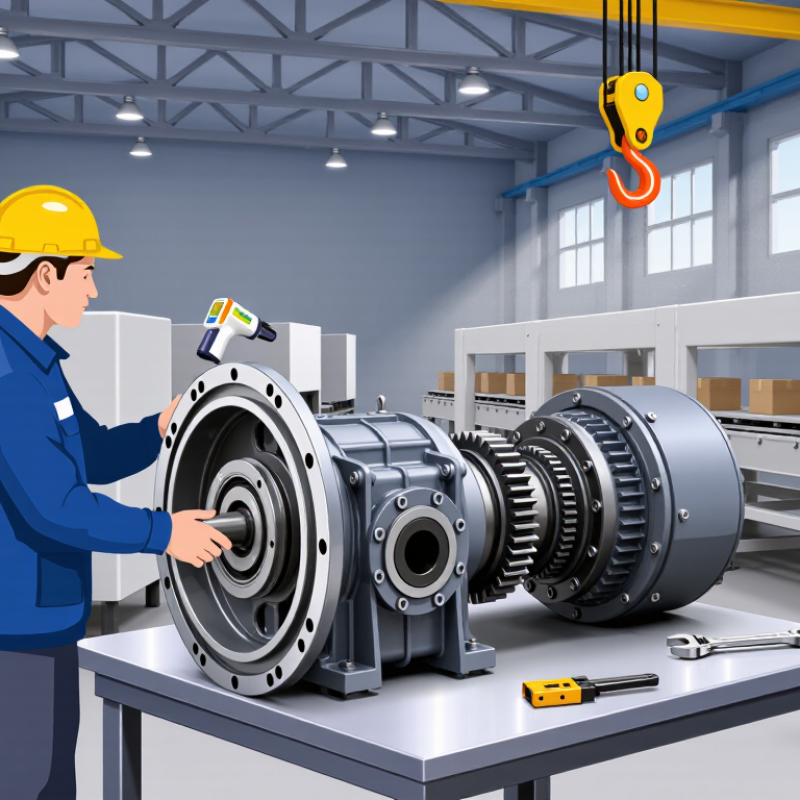
Choosing the right industrial gear motor starts with defining the real operating requirements. Do not begin with motor size alone. Record the required output speed, continuous torque, peak torque, load type, and duty cycle. A conveyor may run steadily, while a mixer can demand sudden torque during startup. Note the number of starts per hour and the expected daily operating time. These details influence gearbox ratio, motor power, thermal capacity, and service factor.
Tips: Measure the load at the machine shaft when possible. Separate normal torque from short overloads. Check acceleration time, stopping time, and allowable backlash. Also inspect the installation environment. Dust, moisture, heat, vibration, and limited airflow can change the motor’s performance. Confirm the mounting position, shaft direction, available space, and power supply before selecting equipment. Small details matter here. A neat spreadsheet can still lie if its readings come from ideal conditions rather than the production floor.
Review the requirements with both mechanical and electrical limits in mind. A motor that reaches the correct speed may still overheat under repeated starts. Likewise, a large motor is not automatically safer or more efficient. Consider efficiency at the actual load, noise limits, brake requirements, and maintenance access. I have seen projects focus heavily on rated power and overlook washdown exposure or misalignment. That mistake is easy to repeat. Leave room for verified overloads, but avoid guessing. If operating data is uncertain, test the machine during its hardest normal cycle and record temperature, current, speed, and vibration.
Record output speed, continuous torque, peak torque, load type, and duty cycle. Count starts per hour and daily running time. Measure the machine shaft when possible. Production-floor data is better than guesses.
Use T = 9550P/n. Here, T is torque in newton-metres, P is kilowatts, and n is revolutions per minute. Include gearbox losses and temporary overloads. Average load alone can mislead.
A motor may reach the correct speed but overheat during repeated starts. Check peak torque, acceleration time, thermal capacity, and load inertia. An oversized motor can waste energy. More power is not always safer.
Continuous operation needs strong thermal capacity. Intermittent duty depends on starts, rest periods, and operating duration. Record ambient temperature and available airflow. Small details matter.
Divide motor speed by required output speed. For example, 1,450 rpm divided by 29 rpm gives about 50:1. Then check torque, acceleration, and heat. Speed is only one piece.
Helical gearboxes fit continuous conveyor work and usually run quietly. Worm gearboxes offer compact layouts and possible self-locking behavior. Bevel and planetary designs suit high torque or limited space. Efficiency varies.
Check mounting position, shaft direction, space, voltage, dust, moisture, heat, and vibration. Inspect airflow and maintenance access. Washdown exposure can change the decision. Do not overlook alignment.
Run the machine during its hardest normal cycle. Record temperature, current, speed, vibration, and acceleration time. Check oil temperature after extended operation. My own imperfect habit is checking torque first and thermal limits later.
Choosing the right Industrial Gear Motor begins with a clear understanding of the machine’s operating requirements. Consider the expected load, starting conditions, operating speed, torque demand, duty cycle, and frequency of use. The motor’s power and torque should be matched carefully to the application to prevent overheating, inefficient operation, or premature wear. Selecting an appropriate gearbox type and reduction ratio is equally important, as these factors determine output speed, torque multiplication, and overall performance.
In addition to mechanical specifications, evaluate efficiency, ambient temperature, dust, moisture, vibration, mounting position, and maintenance accessibility. A suitable motor should meet relevant safety and performance standards while offering dependable construction and service support. When comparing suppliers, look beyond the initial purchase price and assess product quality, technical assistance, spare parts availability, energy consumption, maintenance requirements, and expected service life. Considering the total cost of ownership will help ensure a reliable, efficient, and economical solution for long-term industrial operation.
