Dynetic Motor Dynetic Motor

How to Choose a Planetary Gear Motor for Your Application

Time:2026-10-28 Author:Madeline
0%

Choosing a Planetary Gear Motor is not simply a matter of selecting the highest torque rating. The right choice begins with the application, operating environment, and expected service life. A conveyor may need steady torque at low speed. A robotic joint may demand fast response, low backlash, and compact packaging. Small details matter.

Dr. David H. Myszka, a respected mechanical power-transmission educator, offers a useful design reminder: “The best gear train is the one that meets the application requirements.” This principle keeps selection practical. It directs engineers toward load cycles, duty factor, reduction ratio, efficiency, noise, and thermal limits. It also discourages choosing a motor from a catalog headline alone.

A reliable selection process connects calculations with physical experience. Check the continuous torque, peak torque, output speed, and starting load. Then examine shaft alignment, mounting space, lubrication, ambient temperature, and shock loading. A motor that performs well on paper may still overheat inside a sealed enclosure. That is easy to miss.

Real testing helps. Measure current draw, housing temperature, vibration, and backlash during representative cycles. Leave some safety margin, but avoid excessive oversizing. It can increase cost and reduce responsiveness. Imperfect assumptions are common. Review them before they become expensive failures.

This guide explains how to compare Planetary Gear Motor options with clearer engineering judgment. The goal is not the biggest motor. It is dependable motion, matched to real operating conditions.
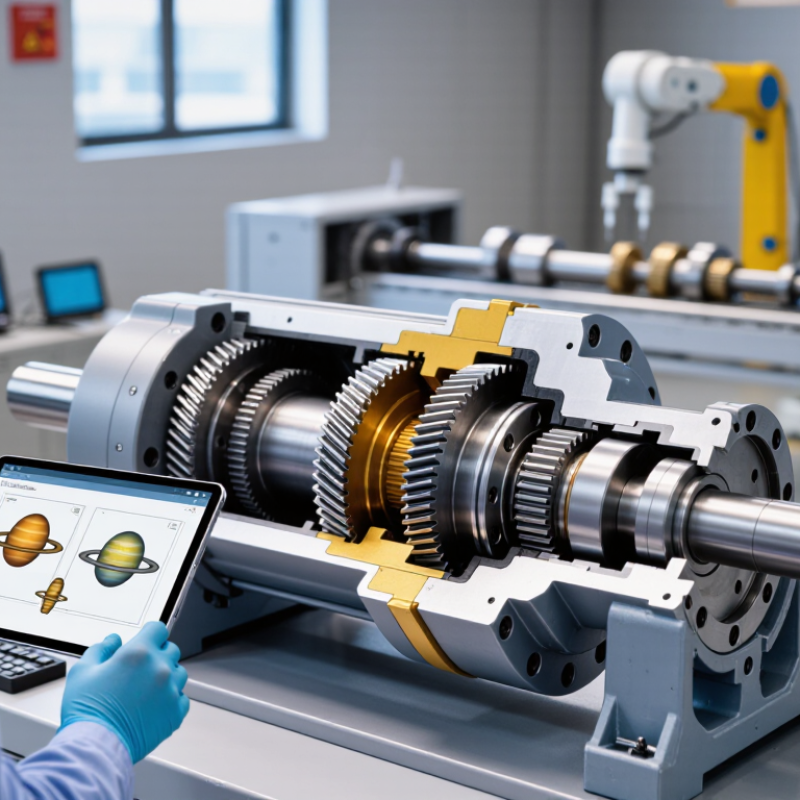
How to Choose a Planetary Gear Motor for Your Application

Define the Motion Requirements of Your Application

How to Choose a Planetary Gear Motor for Your Application

Define the Motion Requirements of Your Application

Begin by describing what the mechanism must do, not which motor looks suitable. Record the required speed, torque, travel distance, acceleration, and stopping time. A conveyor moving 12 kilograms may need steady torque, while a robotic joint needs rapid acceleration and controlled positioning. These are different duties.

Specify the operating cycle in real numbers. Note running time, rest time, starts per minute, and direction changes. A motor that survives one short movement may overheat during repeated cycles. Measure the actual load when possible. Estimates often miss friction, cable tension, or an uneven guide. Small details matter.

Calculate output torque at the gearbox shaft, including acceleration torque and external resistance. Then check the required output speed and gear ratio. For positioning systems, define acceptable backlash, repeatability, and stopping error. A planetary gearbox can provide high torque density, but its performance still depends on load distribution and lubrication. Do not choose a high ratio automatically; it may reduce speed more than expected.

The installation environment also shapes the motion requirement. Dust, heat, vibration, and limited mounting space can change the practical choice. I have seen designs pass calculations but fail after a few weeks because the duty cycle was understated. That is worth questioning. Test the motor under the hardest expected cycle, and leave a sensible margin without oversizing blindly.

How to Choose a Planetary Gear Motor for Your Application

Define the Motion Requirements of Your Application

The chart compares representative output-speed and continuous-torque requirements for common motion profiles. Use the required speed, torque, acceleration, duty cycle, load inertia, and positioning accuracy as the starting points for planetary gear motor selection. Confirm peak torque and thermal limits under the actual operating cycle before final sizing.

Match Gearbox Specifications to Load and Speed Demands

Choosing a planetary gear motor starts with the load, not the catalogue speed. Estimate continuous torque, peak torque, duty cycle, and acceleration separately. A conveyor may need modest running torque but nearly twice that torque during startup. Apply a service factor, yet avoid excessive oversizing. A larger motor can increase cost, inertia, and energy use.

The gearbox ratio should place the motor near its efficient operating range. Calculate output speed from the required cycle, then verify output torque after efficiency losses. A 20:1 ratio does not deliver twenty times the input torque. Thermal limits, bearing loads, backlash, and radial forces also matter.

The U.S. Department of Energy reports that motor-driven systems consume about 70% of industrial electricity in the United States. Small efficiency losses can therefore become meaningful operating costs.

Check the real duty profile.

The International Energy Agency estimates that electric motor systems use roughly half of global electricity. That makes gearbox efficiency more than a specification-sheet detail. In field sizing, the tempting shortcut is matching rated torque alone. It fails when shock loads, frequent reversals, or poor cooling appear.

I would also question optimistic manufacturer curves. Ask for continuous torque at the actual ambient temperature and mounting position. Verify noise, lubrication life, and allowable overhung load.

A planetary design may provide high torque density, but compactness does not remove thermal limits. The final selection should survive the worst credible cycle, not only the average one.

Evaluate Motor Compatibility, Efficiency, and Thermal Limits

Choosing a planetary gear motor starts with mechanical compatibility. Match the motor voltage, mounting pattern, shaft diameter, and gearbox ratio to the machine. A 24-volt motor may fit electrically but still fail under a 0.8-newton-meter load. Check continuous torque, peak torque, speed, backlash, and radial loads. Small errors here become noisy failures.

Efficiency affects both output and operating cost. Calculate gearbox losses at the actual speed, not only the rated speed. A motor running at 3,000 rpm may deliver less useful power after several reduction stages. Measure current during startup, acceleration, and steady movement. I often compare datasheet figures with a loaded bench test. The results are not always identical. Temperature, lubrication, and alignment change performance.

Thermal limits deserve careful attention. Estimate heat from motor losses, gearbox friction, ambient temperature, and duty cycle. Then monitor the housing after repeated cycles. If the case reaches 60°C in a 25°C room, continuous operation may require a larger motor or longer rest periods. Leave practical margin. A neat spreadsheet is not proof. In one test, a motor passed ten cycles but overheated after an hour. That result forced a slower duty cycle and better airflow. Select the motor only after checking its thermal behavior inside the real enclosure.

Select Materials, Mounting Options, and Environmental Protection

How to Choose a Planetary Gear Motor for Your Application

Material selection begins with the load profile, not the product catalog. Planetary gears commonly use hardened steel for repeated torque and shock loads. Sintered metal can reduce cost, but it may tolerate less severe impact. Aluminum housings reduce weight, while stainless steel resists moisture and chemical exposure. Lubricant compatibility also matters, especially near food-processing or high-temperature equipment. The IEA reports that motor systems consume about 46% of global electricity, so efficient gearing deserves careful attention.

Mounting geometry can quietly decide service life. Match flange or foot mounting to the machine’s stiffness and available space. Check shaft alignment before installation. Even small offsets can increase bearing loads, noise, and backlash. Confirm allowable radial and axial loads from the motor’s technical data.

Real installations are messier than catalogs. I have seen compact drives fail because mounting bolts were tight, but the output shaft was poorly supported.

Environmental protection should follow IEC 60529 ratings. An IP65 enclosure resists dust and water jets, while IP67 also supports temporary immersion. These ratings do not guarantee chemical resistance or continuous washdown performance. For corrosive locations, compare housing materials, seals, and fasteners. ISO 9227 salt-spray testing can reveal coating weaknesses, but it cannot predict every field condition. Temperature needs equal attention; grease viscosity, insulation, and sealing performance may change sharply outside the rated range. A cautious design leaves margin. Perhaps too much margin costs efficiency, but too little invites early failure.

Compare Suppliers, Testing Standards, and Long-Term Operating Costs

How to Choose a Planetary Gear Motor for Your Application

Supplier comparisons should begin with evidence, not catalog torque. The IEA’s Energy Efficiency 2023 report estimates that motor-driven systems consume roughly half of global electricity. Small efficiency losses can compound.

Ask suppliers for measured performance at your actual speed, load, and duty cycle. Request winding temperature, backlash, noise, and lubricant data. The quotation is only the entrance fee.

Testing standards make technical claims more comparable.

IEC 60034-2-1 defines motor efficiency test methods. ISO 6336 supports planetary gear load calculations. ISO 20816 helps assess vibration severity. Confirm the test fixture, ambient temperature, sample size, and acceptance limits.

No test is perfectly transferable. A polished report can still miss intermittent thermal rise. Require calibrated instruments and traceable records.

Long-term cost includes electricity, grease, seals, spare parts, downtime, and replacement labor.

Build a five-to-ten-year model using your real duty cycle. Include startup loads and frequent reversing. A lower purchase price may conceal costly service interruptions.

Ask suppliers for failure-rate data, warranty exclusions, and local repair capability. Review actual field returns when possible.

I would also test one unit under harsh conditions before approving a large order. That extra step feels slow. It may prevent an expensive lesson.

FAQS

What should I measure before choosing a planetary gear motor?

Measure continuous torque, peak torque, speed, duty cycle, acceleration, and load direction. Startup may demand nearly twice the running torque. Do not size from catalogue speed alone.

How should I choose the gearbox ratio?

Calculate the required output speed from the machine’s actual cycle. Then place the motor near its efficient operating range.

Why is oversizing a gear motor risky?

Oversizing can increase cost, inertia, energy use, and mechanical stress. A larger motor is not automatically safer. Leave practical margin, not unlimited margin.

What losses should I include when estimating output torque?

Include gearbox efficiency losses at the actual operating speed. Several reduction stages may reduce useful output power. Rated figures can look better than loaded performance.

Which mechanical and electrical details must match?

Check voltage, mounting pattern, shaft diameter, gearbox ratio, backlash, and speed. Also verify continuous torque and peak torque. A motor can fit electrically but still fail mechanically.

How do shock loads and reversals affect selection?

Frequent reversals, sudden starts, and shock loads increase mechanical demand. A conveyor may need modest torque while running. Startup can be much harsher.

How can I check thermal performance?

Estimate heat from motor losses, gearbox friction, ambient temperature, and duty cycle. Monitor the housing after repeated cycles inside the real enclosure. A 60°C case in a 25°C room deserves attention.

Is a short bench test enough to confirm suitability?

No. A motor may pass ten cycles and overheat after one hour. Test startup, acceleration, steady movement, and repeated operation. A neat spreadsheet is not proof.

What additional gearbox limits should I verify?

Check bearing loads, radial forces, allowable overhung load, lubrication life, noise, and backlash. Compact planetary designs still have thermal limits. Small errors become noisy failures.

Conclusion

Choosing the right Planetary Gear Motor begins with clearly defining your application’s motion requirements, including speed, torque, direction, duty cycle, positioning accuracy, and available installation space. These factors help determine the appropriate gear ratio, output configuration, and gearbox capacity. The gearbox should be matched carefully to the expected load, starting torque, operating speed, shock loads, and service duration to ensure reliable performance without unnecessary oversizing.

Motor compatibility is equally important. Evaluate efficiency, power requirements, heat generation, noise, and thermal limits under continuous and intermittent operation. Consider suitable materials, shaft arrangements, mounting methods, sealing, and environmental protection based on factors such as dust, moisture, vibration, and temperature. Finally, compare suppliers by reviewing quality controls, testing procedures, dimensional consistency, documentation, warranty support, and expected service life. A complete assessment should include not only the initial purchase price, but also energy use, maintenance needs, replacement frequency, and long-term operating costs. This balanced approach helps select a dependable solution that performs efficiently throughout the application’s lifecycle.

Madeline

Madeline

Madeline is a dedicated marketing professional with a wealth of expertise in our company's core offerings. With a keen understanding of the industry, she brings a unique perspective to her role, consistently delivering high-quality content that highlights the superior aspects of our products. As......