Dynetic Motor
In 2026, choosing a gear motor kit means matching its performance to the job, not simply picking the highest torque number. A Gear Motor Kit may include a motor, gearbox, brackets, and a controller, but the exact contents vary. Check the product list before comparing prices. Small details matter.
Start with the load, required speed, and available power supply. For a compact robot, a slow motor with enough torque may work better than a fast unit that stalls under weight. Check voltage, gear ratio, shaft dimensions, mounting holes, and rated duty cycle. Still, specifications can mislead. A motor’s real performance depends on the load and operating conditions.
This guide will explain how to compare kits, spot compatibility issues, and assess documentation before buying. Look for clear drawings, wiring details, and stated limits rather than relying on a vague product description. If possible, test the motor under a representative load and check for excess heat, noise, or vibration. Keep notes. A kit that performs well on a workbench may behave differently in a finished project, and that is easy to overlook. The best choice is the one that fits your application, can be installed safely, and has enough reliable information to support a sensible decision.
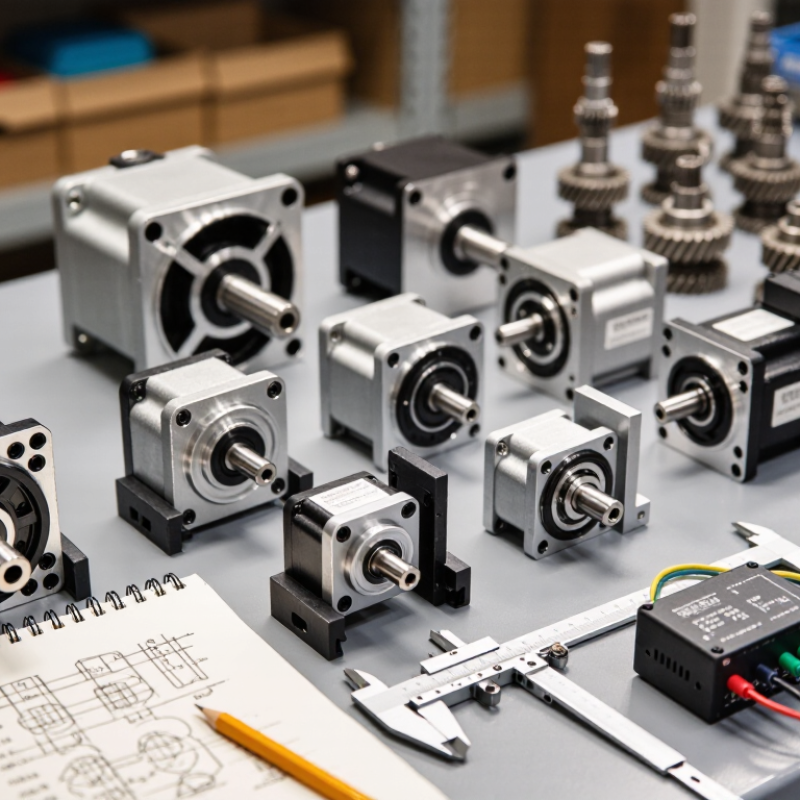
Define the job before comparing gear motor kits. Record the driven load, required output speed, continuous torque, and peak starting torque. A conveyor carrying wet cartons needs different margins from a small indexing table. Note the duty cycle, starts per hour, reversals, and any chance of the load driving the motor backward. Small details matter.
The U.S. Department of Energy’s 2014 Improving Motor and Drive System Performance sourcebook estimates that motor-driven systems account for about 70% of U.S. industrial electricity use. The IEA’s 2011 Energy-Efficiency Policy Opportunities for Electric Motor-Driven Systems estimated their share at about 45% globally. These figures make efficiency worth checking, but they do not select a kit by themselves. Match the motor’s continuous rating to real operating conditions, not just a brief peak. Confirm voltage, controller compatibility, mounting space, shaft dimensions, and ambient temperature.
Measure the actual load if possible. A spring scale and pulley can reveal more than a guess based on the machine’s size. Then check gearbox ratio, output-shaft torque, backlash, and allowable radial load. Allow for heat buildup during repeated starts. This estimate may still be imperfect; real friction and load changes are easy to miss. Test the chosen setup under its normal cycle before finalizing the specification.
Start with the load, speed, and space available. A spur gearbox is often a practical choice for simple, compact drives. Planetary units can deliver high torque in a small footprint. Worm gears may suit right-angle layouts, but their efficiency and heat buildup need checking. The U.S. Department of Energy’s 2021 U.S. Industrial and Commercial Motor System Market Assessment estimates that motor-driven systems account for about 68% of U.S. manufacturing electricity use. That figure is a useful reminder: judge the motor and gearbox as one system, not by motor wattage alone.
Gear ratio sets the trade-off between speed and torque. A 10:1 reduction turns a 3,000-rpm motor output into roughly 300 rpm, while increasing output torque, minus transmission losses. Match the ratio to the real load, including startup resistance and sudden changes. A high ratio is not automatically better. It can make the output too slow, and some designs may not hold position when power is off. Check the gearbox’s rated torque, duty cycle, backlash, and thermal limits against the kit’s actual operating conditions.
Tips: Measure the load at the shaft, not by guesswork. Leave a safety margin, but avoid oversizing without reason. I would recheck the ratio after testing a sample under load; paper calculations can miss friction and heat.
How to Choose the Best Gear Motor Kit in 2026?
A gear motor kit should match the load, not just the product description. Torque determines whether it can start and move that load, especially when friction or a brief jam is possible. Check both rated and starting torque. A small conveyor carrying uneven items may need more starting torque than its steady movement suggests. Speed matters too: compare the motor’s output RPM with the speed your mechanism actually needs. A fast motor is not automatically better.
Power connects torque and speed, so changing one can affect the other. Check the kit’s rated power and operating limits rather than relying on a peak figure alone. Efficiency describes how much input power becomes useful output; losses often appear as heat. That matters. Compare efficiency at a similar load and speed to your planned use. Datasheets can be incomplete, and real setups add friction, so leave a sensible margin.
Tips: Write down the load, desired output speed, duty cycle, and available voltage before comparing kits. Confirm shaft size and mounting dimensions, too. Test the motor with the actual mechanism if possible. Listen for strain and check temperature after a short run. A kit that seems slightly oversized may be quieter and more reliable, but it can also cost more and waste energy at light loads. There is no perfect choice on paper.
Compare torque, speed, power, and efficiency across illustrative gear ratios.
These are calculated examples, not measurements of specific products. Each option assumes a 3,000 rpm, 100 W motor; output speed is motor speed divided by gear ratio, and output power and torque account for the stated illustrative gearbox efficiency. The chart indexes each metric to its highest value; hover over a bar to see the calculated value. Choose a ratio based on the load and target speed, and verify actual kit specifications before purchasing.
Check Kit Compatibility, Mounting, and Controls
Start with the load, speed, and duty cycle—not the kit’s advertised maximum torque. A gear motor that turns a bench smoothly may struggle with repeated starts under load. Check shaft diameter, output orientation, voltage, current, and controller type against your existing parts. Measure the mounting holes and available clearance; a few millimeters can decide whether the gearbox fits. Small gaps matter. The U.S. Department of Energy’s United States Industrial Electric Motor Systems Market Opportunities Assessment reports that motor-driven systems use about 69% of electricity in U.S. manufacturing. That figure covers industrial systems broadly, not small kits, but it shows why matching the motor and load matters.
Mounting details deserve a physical check. Confirm the bolt pattern, shaft length, coupling size, and room for wiring before ordering. Then verify that the controller supports the motor’s voltage and starting current. If speed control is needed, check how the system behaves at low speed; some combinations lose torque or run unevenly. Still, paper specifications cannot reveal every vibration or alignment problem. A dry fit and a brief unloaded test can catch issues early.
Tips: Photograph the mounting area and label each wire before disassembly. Compare the kit’s drawing with your measurements, not just its product description. Leave space for connectors and airflow. If the figures conflict, pause and ask for a verified drawing—guessing is tempting, but not a reliable fit test.
A gear motor kit should survive the job, not just pass a quick bench test. Check gear material, shaft alignment, bearing ratings, and the rated duty cycle against your real load. A warm housing after repeated starts is a warning, not a minor detail. The U.S. Department of Energy reports that motor-driven systems use about 54% of electricity consumed by U.S. manufacturing. That makes efficiency and heat management practical concerns, especially in equipment running long shifts. Ask for test conditions behind torque, temperature, and service-life claims; a number without its test setup is hard to compare.
Safety depends on the whole assembly. Confirm that the motor’s electrical protection, mounting, guarding, and emergency stop suit the machine it will drive. IEC 60034 provides widely used requirements for rotating electrical machines, but compliance alone does not verify your finished installation. Measure operating temperature and vibration during commissioning. Small checks matter. Supplier support is part of the kit, too: request clear wiring diagrams, replacement-part availability, troubleshooting guidance, and a response-time commitment. If support ends at checkout, the lowest price may become an expensive delay. I would also ask how warranty claims are assessed; it is easy to overlook this until a gearbox fails mid-project.
| Gear motor kit type | Typical characteristics | Durability assessment | Safety checks | Supplier support to verify |
|---|---|---|---|---|
| Spur gear | Parallel shafts; commonly used for compact, straightforward speed reduction. Efficiency is often high, but varies by stages, ratio, and design. | Check gear and shaft materials, bearing ratings, lubrication method, rated output torque, and permitted duty cycle. Expect more gear noise than some helical designs. | Confirm the motor’s voltage, current, and temperature limits; guard exposed gears and rotating shafts; provide overload protection where required. | Request a dimensioned drawing, load and speed curves, wiring information, and replacement-gear availability. |
| Planetary gear | Coaxial input and output; multiple planets distribute load. Often selected where a compact package and relatively high torque density are useful. | Assess rated and peak torque separately, bearing capacity, backlash specification, housing stiffness, and thermal limits under the intended duty cycle. | Check stall and peak-current behavior, secure mounting, shaft-coupling alignment, and whether the application needs a brake or external restraint. | Verify written torque, speed, backlash, and service-life ratings, plus guidance for mounting and lubrication. |
| Worm gear | Right-angle output and substantial reduction in a compact arrangement. Efficiency can vary widely with ratio, materials, lubrication, and operating conditions. | Check heat generation, lubricant type and service interval, continuous-duty rating, and allowable radial and axial loads. Higher operating temperatures can shorten service life. | Do not assume the gearbox is self-locking. Use a properly rated brake or other restraint if uncontrolled motion could create a hazard. | Ask for efficiency and thermal data at the intended load and speed, lubricant instructions, and confirmation of any back-driving limits. |
| Helical gear | Angled teeth generally provide smoother, quieter engagement than comparable straight spur gears. Axial thrust must be considered. | Review bearing arrangement, lubrication, thermal rating, output-load limits, and service-life assumptions for the specified speed and duty cycle. | Confirm that bearings and mounting can handle axial as well as radial loads; guard couplings and other rotating components. | Request noise, load, and thermal ratings for the actual configuration, along with installation and maintenance documentation. |
| Bevel gear | Changes the direction of rotation, commonly by about 90 degrees. Available performance depends on gear geometry and gearbox construction. | Check gear contact, bearing support, housing rigidity, lubrication, and permissible shaft loads; avoid misalignment and shock loads beyond the rating. | Verify mounting orientation, shaft retention, coupling guards, and safe behavior during power loss or a jam. | Confirm the output direction, mounting dimensions, shaft-load limits, and availability of technical help for installation. |
Before ordering, match the kit’s rated output speed and continuous torque to the application, check starting and peak loads, confirm motor power and controller compatibility, and review applicable electrical and machine-safety requirements.
Record the load, target output speed, continuous torque, and peak starting torque. Note starts per hour, reversals, and duty cycle. Small details matter.
A spring scale and pulley can give a more useful estimate than the machine’s size. Measure at the shaft when possible. My estimate may still miss changing friction.
Spur gearboxes often work well for simple drives. Planetary units can provide high torque in a small space. Worm gears suit right-angle layouts, but check heat and efficiency.
Match the ratio to the required output speed and load. A 10:1 reduction turns 3,000 rpm into about 300 rpm, before transmission losses. A higher ratio is not always better.
Compare continuous and peak torque, duty cycle, backlash, and thermal limits with the actual operating cycle. Check shaft dimensions, mounting space, voltage, and controller compatibility.
Check the housing temperature during repeated starts and normal operation. A warm housing can signal a problem. Measure temperature and vibration during commissioning.
Check electrical protection, secure mounting, suitable guarding, and an emergency stop. The finished machine needs review, even when its motor meets relevant requirements.
Request wiring diagrams, replacement-part availability, troubleshooting guidance, and expected response times. Ask how warranty claims are assessed. I would check this before a gearbox fails mid-project.
Choosing the best Gear Motor Kit in 2026 starts with a clear understanding of the application. Consider the load, operating environment, duty cycle, available power supply, and the level of precision required. These details help narrow down the motor and gearbox options. Next, select a gear motor type and ratio that suit the task, balancing the required output speed with the torque needed to move or drive the load.
Compare torque, speed, power, and efficiency rather than judging a kit by a single specification. Check that its components, mounting dimensions, shaft, wiring, and controls are compatible with your setup. Also consider durability, temperature limits, safety features, maintenance needs, and the availability of useful technical support. A well-matched kit should meet both current operating demands and likely future needs, while remaining straightforward to install, control, and maintain.
