Dynetic Motor Dynetic Motor

Top Micro Gear Motor Types for Global Buyers

Time:2026-10-09 Author:Aria
0%

Selecting the right Micro Gear Motor begins with the application, not the catalog headline. Global buyers must compare torque, speed, voltage, efficiency, noise, dimensions, and expected service life. A motor that performs well in a handheld scanner may fail inside a medical pump. The load profile matters.

Dr. Elena Marquez, a veteran miniature motion-control engineer, offers a practical warning: “Choose the gearbox for the real load, not the advertised speed.” Her point is easy to test. Place the motor beside the intended mechanism. Check the shaft diameter, mounting holes, connector position, and available clearance. Then examine starting torque, stall protection, duty cycle, and backlash. Small mismatches can create expensive redesigns.

Several motor types deserve attention. Spur gear motors usually offer economical, efficient transmission for compact devices. Planetary gear motors provide higher torque density and stronger load distribution. Worm gear motors can deliver substantial reduction and holding performance, although efficiency may decrease. Helical gear systems often support smoother, quieter operation. Each option has trade-offs.

Specifications can mislead.

A reliable comparison also includes samples, endurance testing, thermal measurements, and supplier traceability. Ask for rated curves, not only maximum values. Confirm whether performance data reflects continuous or intermittent operation. Certification requirements, packaging quality, lead times, and technical support also influence total purchasing risk.

No single motor type wins every market. That is the uncomfortable truth. Careful buyers leave room for revision after prototype testing. This guide examines the leading Micro Gear Motor types and explains where each design fits, from smart appliances and instruments to robotics and portable equipment.
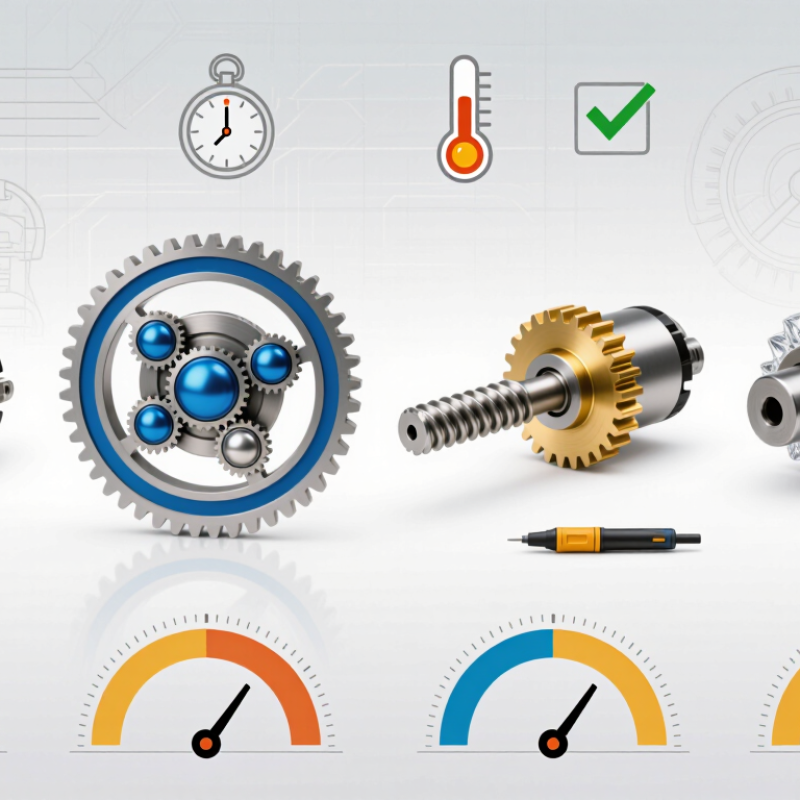
Top Micro Gear Motor Types for Global Buyers

Micro Gear Motors: Definition, Structure, and Core Operating Principles

Micro gear motors combine a compact electric motor with a reduction gearbox. They convert electrical energy into controlled rotary motion. It is compact. Yet the internal structure is surprisingly precise.

A typical unit contains a stator, rotor, commutator or electronic controller, bearings, shafts, and a protective housing. The gearbox may use spur, helical, planetary, or worm gears. Each design changes speed, torque, noise, efficiency, and allowable load.

The motor creates electromagnetic force inside the stator. This force turns the rotor and output shaft. The gear train then reduces rotational speed while increasing output torque. The gearbox changes that.

For global buyers, the gear ratio is only one selection factor. Rated voltage, no-load speed, stall torque, duty cycle, temperature, shaft alignment, and operating noise also require verification.

A higher ratio may deliver stronger torque, but it can increase backlash and reduce efficiency. Worm gears can resist reverse motion, although they may generate more heat.

Planetary gears often offer high torque in a small diameter, but their tighter construction can raise cost.

In practical testing, measure current under the real load, not only at free speed. A motor that looks powerful on paper may fail after repeated starts. That detail is easy to miss. Engineers should also inspect mounting holes, shaft play, connector quality, and gearbox lubrication. Small variations in these areas can affect service life. Selection remains a compromise, and datasheets rarely describe every installation condition.

Main Types of Micro Gear Motors and Their Distinctive Features

Micro gear motors differ mainly in tooth geometry, torque behavior, noise, and space efficiency. Spur gear motors use straight teeth and offer a low-cost, compact solution for toys, valves, and small positioning devices. Their efficiency is usually strong, but audible noise rises at higher speeds. Helical gear motors run more quietly because angled teeth engage gradually. They also create axial loads, which require better bearing support.

Planetary gear motors place several gears around a central sun gear. This structure delivers high torque, good shock resistance, and a short gearbox length. It suits robotic joints, medical mechanisms, and portable instruments. Worm gear motors provide high reduction ratios and may resist back-driving, though friction can reduce efficiency and increase heat. Bevel gear motors change the output direction, often by 90 degrees, making them useful where installation space turns sharply. Tiny details matter here.

The International Energy Agency estimates that electric motor systems consume roughly 45% of global electricity. This explains why efficiency deserves attention, even in miniature equipment. A 2024 MarketsandMarkets assessment also projects continued growth in the global gear motor market, driven by automation, mobility, and compact appliances. Buyers should verify rated torque, stall current, duty cycle, backlash, and thermal limits rather than rely on size alone. In practice, the smallest motor is not always the best choice. Gear noise and startup performance can be overlooked during early testing. That mistake is worth reconsidering.

Top Micro Gear Motor Types for Global Buyers

Typical efficiency ranges by micro gear motor type

Spur: Cost-effective, compact, and suitable for moderate loads and standard speed reduction.
Planetary: High torque density, strong load sharing, and low backlash in compact applications.
Worm: High reduction in a small package, with quiet operation and possible self-locking.
Bevel: Transfers motion through an angle, commonly 90°, while maintaining good efficiency.
Helical: Smooth, quiet transmission with high efficiency and improved tooth engagement.

The ranges shown are representative engineering values for small geared drives; actual performance depends on load, lubrication, gear ratio, materials, and operating speed.

How to Compare Torque, Speed, Voltage, and Gear Ratios

Top Micro Gear Motor Types for Global Buyers

Comparing micro gear motors starts with the load, not the product label. Spur gear motors usually offer efficient, affordable motion for light mechanisms. Planetary gear motors handle higher torque in compact spaces. Worm gear motors provide strong reduction and may resist back-driving. Helical gears often run more quietly, though their cost and size can increase.

Torque must cover the working load and starting resistance. Measure both continuous torque and stall torque. A small conveyor may need steady torque, while a valve actuator may need brief starting force. Speed depends on motor rotation and gear ratio. Higher reduction increases output torque but lowers speed.

For example, a 6,000 rpm motor with a 60:1 ratio may deliver about 100 rpm before losses. Real output will be lower.

Voltage requires careful checking. A 12 V motor should receive a stable 12 V supply, while its driver must handle startup current. Current ratings are easy to overlook. Gear ratio also affects noise, heat, and operating life.

Test the motor under the real load, at the real duty cycle, and in the expected ambient temperature. Datasheet figures can look precise, but mounting friction and poor alignment change results. I once treated no-load speed as a practical speed estimate; it was not. Ask suppliers for tolerance data, efficiency curves, shaft play, and sample testing records before approving a global shipment.

Selecting the Right Micro Gear Motor for Global Applications

Top Micro Gear Motor Types for Global Buyers

Selecting the Right Micro Gear Motor for Global Applications

Choosing a micro gear motor starts with the load, speed, and operating pattern. Spur gear motors suit compact devices with moderate torque and lower cost. Planetary designs deliver higher torque density and better efficiency. Worm gear motors offer strong reduction and useful holding performance, but they may produce more heat.

Define the working conditions carefully. Record continuous torque, starting torque, shaft speed, duty cycle, and allowable noise. A motor driving a small valve may need steady force, while a portable instrument may prioritize low current draw. Check the supply voltage and control method for each destination. Small differences matter.

Environment changes the selection. Dust, moisture, vibration, and temperatures can shorten service life. Ask for verified test data, dimensional drawings, winding details, and production tolerances. Review insulation ratings and relevant international test documentation. Samples should run under the real load, not only on a workbench. That part is often skipped.

Backlash can affect positioning. Planetary stages usually control it better than basic spur stages, though the result depends on assembly quality. Worm gears may appear ideal for holding loads, but efficiency can fall sharply at small sizes. A clean spreadsheet can still mislead. Testing one sample is not enough. Compare several units across repeated cycles. Also check packaging, traceability, replacement parts, and technical communication before placing a global order.

Quality, Compliance, and Supply Factors for International Buyers

Top Micro Gear Motor Types for Global Buyers

Choosing a micro gear motor starts with the load, not the catalogue image. Spur gear motors suit low-cost, compact products with moderate torque. Planetary units provide higher torque density and better shock resistance. Worm gear motors offer strong reduction and holding ability, but usually lose more energy as heat. For angled transmission, bevel gears can simplify installation. Grand View Research estimates the global gear motor market will grow steadily through 2030, reflecting wider use in automation, medical devices, and smart equipment.

Efficiency deserves practical attention. The U.S. Department of Energy reports that motor-driven systems consume more than 70% of electricity in American manufacturing. A small efficiency loss can become expensive across thousands of operating hours. Ask for measured no-load speed, rated torque, current draw, noise, backlash, and temperature rise. Request test records from controlled production batches. A polished sample is not enough.

Compliance varies by destination and application. Check IEC 60034 requirements, applicable efficiency classes, electromagnetic compatibility rules, and substance restrictions such as RoHS or REACH. Certification documents should match the exact motor, gearbox, voltage, and revision level. Supply reliability also depends on winding materials, magnets, bearings, and machining capacity. Industry reports often show market growth, but they rarely reveal factory-level risk. That gap matters. Hold an approved sample, define incoming inspection limits, and verify lot traceability before scaling. Even then, forecasts can fail. Build a second-source plan early.

FAQS

What are the main types of micro gear motors?

Common types include spur, helical, planetary, worm, and bevel gear motors. Each design changes torque, noise, efficiency, and installation space. Small, but not simple.

When is a spur gear motor a practical choice?

Spur gear motors suit toys, valves, and small positioning mechanisms. They are compact, affordable, and usually efficient. However, straight teeth can create noticeable noise at higher speeds. A quiet room may reveal the difference.

Why might someone choose a helical gear motor?

Angled teeth engage gradually, so helical motors usually operate more quietly. They may suit equipment near people or sensitive instruments. Their angled teeth create axial loads. Better bearing support may be necessary.

What makes planetary gear motors useful?

Planetary gear motors provide high torque in a short gearbox. Several gears rotate around a central sun gear. They also handle shocks well. Robotic joints and portable instruments may benefit from this structure.

What are the strengths and limitations of worm gear motors?

Worm gear motors offer high reduction ratios and may resist back-driving. This feature can help when the load should not turn the motor backward. Friction may lower efficiency and increase heat. That tradeoff deserves testing.

When should a bevel gear motor be considered?

Bevel gear motors change the output direction, often by 90 degrees. They help when the motor and driven shaft cannot align directly. A sharp installation turn can make them useful. Check the available mounting space carefully.

How should torque and speed be compared?

Compare the motor with the real load, not only its product label. Check continuous torque, stall torque, and starting resistance. A valve may need brief starting force, while a conveyor needs steady torque. Higher reduction increases torque but lowers output speed.

How does gear ratio affect actual motor performance?

A 6,000 rpm motor with a 60:1 ratio may produce about 100 rpm before losses. The actual speed will be lower. Gear ratio also affects noise, heat, and service life. No-load speed is not a reliable operating estimate. I learned that late.

What electrical details should buyers verify?

Match the motor voltage with a stable power supply. A 12 V motor needs suitable 12 V operation. The driver must also handle startup current. Ignoring current ratings can cause disappointing startup behavior.

What testing should be completed before approving a shipment?

Test the motor under its actual load, duty cycle, and ambient temperature. Check rated torque, backlash, shaft play, thermal limits, and efficiency. Ask for tolerance data and sample test records. Mounting friction and poor alignment can change the results. Datasheets are not the whole story.

Conclusion

A Micro Gear Motor combines a compact electric motor with a reduction gearbox to deliver controlled rotational motion, higher output torque, and lower speed. Its main components typically include the motor, gear train, housing, bearings, shaft, and electrical connections. Common types include spur, planetary, worm, and helical gear motors, each offering different advantages in efficiency, compactness, load capacity, noise level, and holding performance. Understanding these differences helps buyers match the motor to applications such as automation, medical equipment, consumer devices, and precision mechanisms.

When comparing options, global buyers should evaluate rated torque, operating speed, voltage, gear ratio, duty cycle, efficiency, dimensions, and environmental conditions. The right Micro Gear Motor should satisfy both mechanical and electrical requirements while allowing suitable safety margins. Buyers should also confirm material quality, production consistency, testing procedures, certifications, documentation, packaging, lead times, minimum order quantities, and after-sales support. Careful assessment of compliance and supply reliability can reduce application risks and support stable international procurement.

Aria

Aria

Aria is a dedicated marketing professional with a deep passion for innovative strategies and a keen understanding of our company's product offerings. With a wealth of experience in the industry, Aria excels at crafting engaging content that highlights the unique features and benefits of our......