Dynetic Motor
Precision Gear Motor technology is entering 2026 with higher expectations for accuracy, efficiency, and compactness. Manufacturers now demand controlled motion in robotic joints, laboratory instruments, packaging lines, and surgical equipment. Small errors can become visible defects, vibration, or expensive downtime.
Market reports show why this category deserves closer attention. Grand View Research estimates that the global gear motor market reached approximately USD 27 billion in 2023, with continued growth through 2030. MarketsandMarkets also identifies robotics, automation, and medical equipment as important demand areas for precision motion systems. However, reported market values differ between studies. Definitions are not always consistent. That limitation deserves attention.
Dr. Andreas Hüllhorst, a motion-control specialist associated with WITTENSTEIN, has emphasized a practical engineering principle: “Precision is not created by the gearbox alone; it comes from the complete drive system.” This view remains highly relevant for 2026. A planetary gear motor may offer strong torque density. A harmonic drive can deliver exceptional compactness and low backlash. Cycloidal, spur, helical, and worm designs each bring different trade-offs.
The most advanced option is not automatically the best option. Sometimes, it is too expensive. Sometimes, its efficiency is unsuitable. This article examines the top Precision Gear Motor types expected to shape 2026 applications, comparing backlash, torque, noise, service life, efficiency, and integration requirements. Real-world selection still requires testing. Datasheets cannot show every vibration pattern, thermal limit, or assembly mistake.
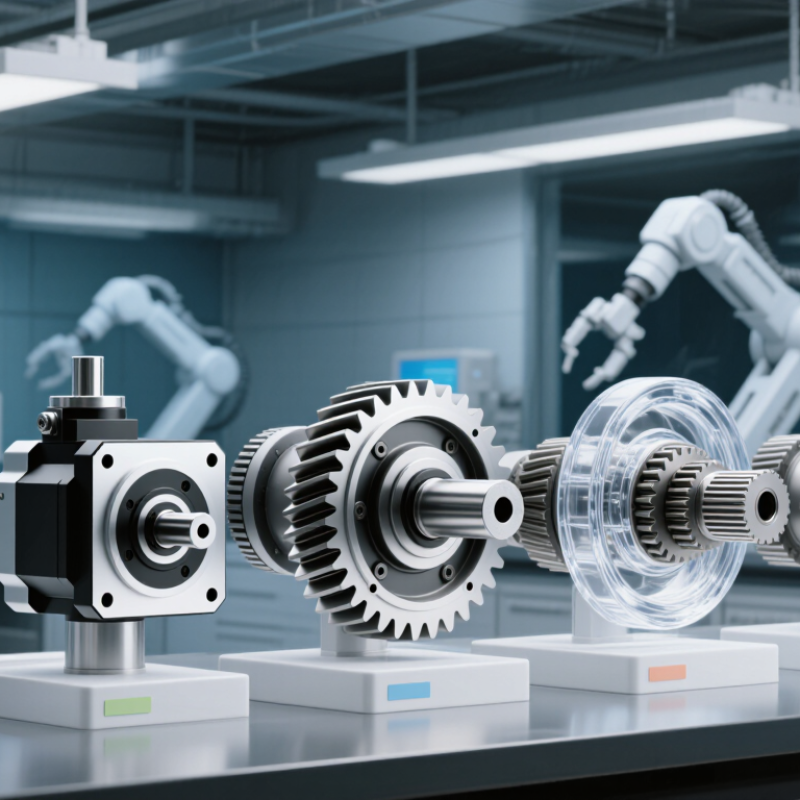
A precision gear motor combines an electric motor with a reduction gearbox to deliver controlled speed and torque. In 2026, “precision” means more than a small gear-tooth tolerance. It describes how consistently the motor positions a load, handles changing forces, and repeats a move over time. Backlash, torsional stiffness, speed ripple, and thermal behavior all matter. Small errors add up.
Consider a packaging arm placing caps into narrow openings. Low backlash helps it stop accurately, while adequate stiffness limits twisting under load. A built-in encoder can report shaft position, but it cannot erase gearbox play or poor mounting. Details matter.
Planetary, harmonic, and worm gear motors each suit different combinations of compactness, reduction ratio, efficiency, and positioning needs. None is automatically the most precise in every setup.
A useful specification should state the load, target speed, duty cycle, allowable positioning error, and operating temperature. Test the complete assembly, not just the motor on a bench. Misalignment, loose couplings, and heat can change real-world performance. And specifications can look cleaner than the application. A precision label alone proves little; measured repeatability under the intended load is stronger evidence.
What Are the Top Precision Gear Motor Types in 2026?
Harmonic Drive Motors for High-Accuracy Motion Control
Harmonic drive motors combine a compact servo motor with a strain-wave reduction mechanism. Their low backlash supports precise positioning in robotic joints, semiconductor tools, and optical equipment. The mechanism uses a flexible spline, a circular spline, and a wave generator. Small errors become visible at the tool tip.
The International Federation of Robotics reported 541,302 industrial robots were installed worldwide in 2023. That figure increased by 10% year over year. Higher robot deployment raises demand for lighter, quieter, and more accurate joint drives. A 2024 motion control market report from Grand View Research also identifies automation and robotics as major growth drivers through 2030. These trends support harmonic designs, especially where installation space is limited.
Field testing still requires caution. High reduction ratios can improve torque, but they may reduce output speed. Heat buildup also affects repeatability during continuous operation. Engineers should measure backlash, torsional stiffness, lost motion, and thermal drift under real loads. Datasheet accuracy can look impressive. It may not match a dusty factory floor. Selecting a motor only by rated torque is an incomplete method. Cable routing, emergency stops, vibration, and maintenance access deserve equal attention. In 2026, harmonic drive motors will remain strong candidates for high-accuracy motion control, but application testing should decide the final configuration.
| Gear Motor Type | Operating Principle | Typical Reduction Ratio | Typical Backlash | Key Advantages | Common Applications |
|---|---|---|---|---|---|
| Harmonic (Strain-Wave) Gear Motor | A flexible toothed cup deforms inside a rigid circular spline, creating motion through a small tooth-count difference. | Approximately 30:1–160:1 in a single stage | Near-zero to less than 1 arcminute in precision designs | High reduction in a compact package, low backlash, and high positional accuracy | Robotics joints, semiconductor equipment, optical positioning, and compact precision axes |
| Precision Planetary Gear Motor | Planet gears rotate around a central sun gear while engaging with an outer ring gear. | Approximately 3:1–10:1 per stage; higher ratios are available with multiple stages | About 1–10 arcminutes for many precision models | Good torque density, efficient power transmission, and a broad range of ratios | Automation, machine tools, packaging machinery, and servo-driven axes |
| Cycloidal Gear Motor | An eccentric input drives a cycloidal disc against pins or rollers, producing a high reduction ratio. | Approximately 10:1–100:1, depending on design and stages | Low backlash is possible; precision varies by design and adjustment | High shock-load capacity and torque in a compact, robust reducer | Robotics, heavy-duty automation, indexing systems, and material handling |
| Precision Worm Gear Motor | A screw-shaped worm drives a mating worm wheel, typically with perpendicular input and output shafts. | Approximately 5:1–100:1 | Often several to tens of arcminutes; varies with design and preload | Compact right-angle layout and high reduction in a single stage | Positioning tables, conveyors, lifts, and right-angle drive systems |
| Precision Bevel Gear Motor | Intersecting bevel gears transfer rotation between angled shafts, commonly at 90 degrees. | Often approximately 1:1–5:1 per stage | Typically a few to tens of arcminutes, depending on gear quality and setup | Efficient right-angle power transmission and flexible shaft arrangements | Robotics, machine tools, and equipment with angled drive layouts |
| Precision Spur or Helical Gear Motor | Meshing cylindrical gears transmit motion between parallel shafts; helical teeth engage gradually. | Often approximately 1:1–10:1 per stage | Depends on gear grade, clearances, and preload; precision versions can have low backlash | Simple, efficient construction; helical designs can run smoothly under load | Compact actuators, medical equipment, instrumentation, and general automation |
Note: Ratio and backlash figures are indicative ranges, not guaranteed specifications. Actual performance depends on the gear design, size, manufacturing tolerance, preload, load, and measurement method. Select a motor and reducer using the application’s required accuracy, torque, speed, duty cycle, and allowable backlash.
What Are the Top Precision Gear Motor Types in 2026?
Planetary gear motors remain a strong choice when equipment needs torque, speed control, and repeatable motion. Their gear arrangement shares the load across several planet gears. This design can deliver high torque from a compact housing. It also limits backlash when manufactured and assembled carefully.
In practical automation, a planetary motor can move a robotic joint, dosing pump, or inspection slide with controlled acceleration. A low-ratio version supports faster output speed. A higher-ratio version increases torque but reduces output speed. The correct balance depends on load inertia, duty cycle, and positioning requirements. Do not size the motor from rated torque alone. Starting torque can briefly exceed running torque.
Precision depends on more than the gearbox. Encoder resolution, shaft stiffness, bearing quality, lubrication, and thermal behavior all affect motion accuracy. A motor may appear precise during a short bench test, then drift after hours of operation. Heat changes clearances. That detail is easy to overlook. I have also seen systems fail because engineers ignored reflected inertia from the load.
For 2026 designs, choose planetary gear motors with documented backlash, efficiency, noise, and service-life data. Test the complete assembly under real load conditions. Laboratory results help, but they are not the whole answer. Slight compromises may be necessary between speed, torque, cost, and compactness. No motor wins every test.
Planetary gear motors combine compact size with coaxial input and output shafts. This chart compares theoretical output speeds for one, two, and three planetary stages, assuming a 3,000 rpm motor and a 5:1 reduction per stage.
Each added 5:1 stage reduces output speed and increases ideal torque multiplication: 5:1, 25:1, and 125:1 respectively. Actual output torque is lower because of losses; precision also depends on factors such as gearbox backlash, manufacturing tolerances, and encoder feedback.
What Are the Top Precision Gear Motor Types in 2026?
Servo and Stepper Gear Motors for Automated Systems
Servo gear motors remain a strong choice for automated systems requiring speed, torque, and accurate positioning. Their feedback sensors detect shaft movement and correct errors during operation. This matters when a robotic joint must stop within a fraction of a degree. In production testing, engineers often examine settling time, backlash, thermal rise, and load changes. A low-backlash planetary gearbox can improve repeatability, especially in compact motion assemblies. The result feels controlled rather than simply powerful.
Stepper gear motors offer a different advantage: predictable movement with simpler control hardware. They suit indexing tables, dosing mechanisms, camera sliders, and light-duty pick-and-place equipment. Their holding torque is useful at low speeds, but torque can fall sharply during rapid acceleration. Microstepping may reduce vibration. It does not always improve absolute accuracy. That detail is easy to miss.
Choosing between them requires more than comparing rated torque. Servo systems usually handle changing loads better, while stepper systems can reduce initial control complexity. However, a poorly sized stepper motor may lose synchronism without obvious warning. I have seen design reviews focus on motor size while ignoring gearbox efficiency and duty cycle. That approach needs reconsideration. Measure actual inertia, acceleration time, operating temperature, and permitted positioning error before selecting the motor type. A small safety margin helps, but excessive oversizing can create slower response and unnecessary energy use.
Choosing a precision gear motor starts with the motion your machine actually needs. Planetary gear motors suit compact designs that require high torque and low backlash. Spur gear motors can be a practical choice for simpler, cost-conscious applications. Worm gear motors offer high reduction in a compact layout, but may lose more energy as heat. Harmonic drives can provide very low backlash, though their load limits and cost need careful review. No type is best for every machine.
Check required output speed, peak torque, duty cycle, and mounting space before comparing specifications. A motor that meets the average load may still struggle during startup or sudden changes in direction. Measure backlash at the output shaft if positioning accuracy matters. Small gaps matter. Also consider heat, noise, lubrication, and how often the unit will run. I once treated a catalog torque value as a safe operating target; it was not enough without checking the duty cycle.
Test the motor with the real load, not just a bench estimate. Record temperature and positioning error after repeated cycles. If results drift, revisit the ratio, mounting, or load assumptions before increasing motor size.
It means repeatable positioning under changing loads, not just tight gear-tooth tolerances. Backlash, stiffness, speed variation, and heat all matter.
Backlash is movement between gear teeth before the output responds. Even a small gap can affect a packaging arm placing caps into narrow openings. Small gaps matter.
No. An encoder reports shaft position, but it cannot remove gearbox play or fix poor mounting.
Planetary gear motors can suit compact designs needing high torque and low backlash. The actual result still depends on the load and setup.
It offers high reduction in a compact layout. However, some energy may become heat, so check temperature during operation.
Check output speed, peak torque, duty cycle, mounting space, and positioning error. Startup loads and sudden direction changes matter too.
Test the complete assembly with its real load. Record temperature and positioning error over repeated cycles.
Not by itself. I once treated a catalog rating as a safe target, but duty cycle changed the picture. Verify the motor under the intended conditions.
In 2026, a Precision Gear Motor is defined by its ability to deliver controlled motion, reliable torque, and consistent accuracy within the demands of a specific application. Harmonic drive motors are well suited to high-accuracy motion control, where compact design and precise positioning are priorities. Planetary gear motors offer a versatile balance of torque, speed, and precision, making them useful across a broad range of mechanical systems.
Servo and stepper gear motors support automated equipment in different ways: servos provide responsive, feedback-based control, while steppers offer predictable incremental movement. Choosing the right type depends on factors such as required accuracy, load, operating speed, available space, control method, and duty cycle. Matching these needs to the motor’s strengths helps create a motion system that performs efficiently and reliably.
